
Himalayan Glaciers Losing Mass 65% Faster, Black Carbon Drives One-Third Of Melt: Study

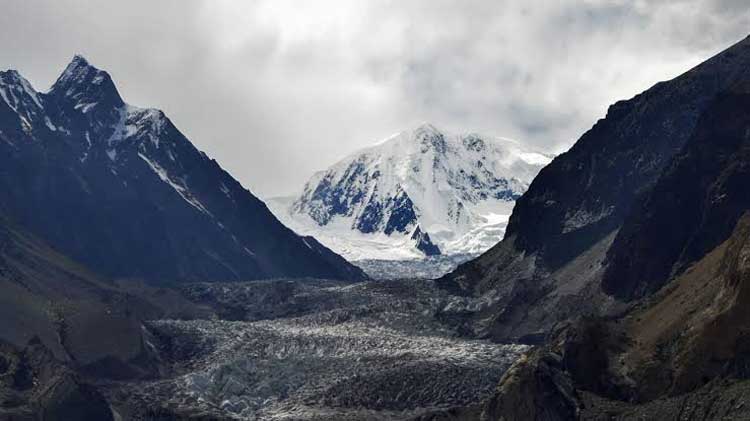
Himalayan glaciers are losing mass 65% faster than they were a decade ago, with black carbon primarily responsible for around one-third of the glacier melt, according to a new study.
The study, conducted by global consultancy Systemiq in collaboration with the Integrated Mountain Initiative, with contributions from the International Centre for Integrated Mountain Development (ICIMOD) and the GB Pant National Institute of Himalayan Environment, warned that the Hindu Kush Himalayas could lose up to 80% of their current glacier volume by 2100 if present trends continue.
The report highlighted the growing importance of the Himalayan region to India, noting that while the Himalayas account for around 18% of the country’s land area, the region contributes to about 35% of disasters and more than 20% of India’s GDP.
Black Carbon Accelerating Glacier Melt
The report said climate change is putting increasing pressure on Himalayan ecosystems at global, regional and local levels. While global warming is destabilising glaciers and other parts of the cryosphere, black carbon emitted from the plains is settling on glaciers and accelerating their melting.
“The heart of the challenge is a growth model putting pressure on Himalayan systems at three levels. Globally, warming created elsewhere is destabilising a cryosphere the region did not put at risk,” the report said.
“Regionally, black carbon drifting up from the plains settles on the same glaciers, accelerating the melt driving today’s disasters, a lever, unlike global warming itself, the region and India can act on directly.”
The report said its research indicates that roughly one-third of Himalayan glacier melt is driven by black carbon, with brick kilns in the plains identified as a major source.
Only 21 Of Nearly 40,000 Glaciers Monitored
The report also raised concerns over the limited monitoring of Himalayan glaciers. Of the nearly 40,000 estimated glaciers across the Hindu Kush Himalayan region, only around 21 are currently being monitored, it said. Of these, approximately 16-17 are in India.
“Shocks are now unavoidable, but the region still lacks the intelligence needed to anticipate them,” the report said.
It noted that only around 0.1% of the Himalaya’s estimated 40,000 glaciers are currently monitored, while permafrost — another major source of instability — is even less understood.
The report called for greater investment in monitoring, early-warning and risk-mapping systems to anticipate hazards and improve preparedness rather than relying primarily on disaster response.
Himalayan River Basins Face ‘Peak Water’
The report warned that most Himalayan river basins are expected to reach “peak water” around the middle of this century.
Peak water refers to the point at which glacier meltwater reaches its maximum before declining as the glaciers lose their ice reserves.
“This is expected across most Himalayan river basins by mid-century, with up to 80% of current glacier volume at risk by 2100,” the report said.
The findings come weeks after a glacial collapse triggered deadly flash floods in Nepal, killing at least 1,350 people, while several hundred others remained missing.
Ten-Fold Action Plan Suggested
The report proposed a ten-fold action approach to strengthen climate resilience and reduce risks in the Himalayan region.
Among its recommendations are:
- Cutting soot and black carbon emissions across glacier-linked airsheds.
- Bringing around 3 million hectares of fire-prone forest under year-round stewardship.
- Restoring and protecting nearly half of the 3 million drying Himalayan springs.
- Managing the carrying capacity of tourist destinations in the Himalayas.
- Making hazard science a prerequisite for development approvals.
- Moving from observation and monitoring towards active risk management.
‘Cross-Border Monitoring Essential’: ICIMOD Chief
Pema Gyamtsho, director general at ICIMOD, said the Hindu Kush Himalayan region is undergoing rapid changes, with glaciers retreating and permafrost and high-mountain slopes becoming increasingly unstable.
“Communities and infrastructure downstream face growing risks from complex and cascading hazards,” Gyamtsho said.
He said the report makes a strong case for coordinated action and greater involvement of the private sector in building resilience.
“Cross-border monitoring, shared risk information and early-warning systems, and joint investment in resilience are all becoming essential for safeguarding lives, livelihoods and economies across the region,” he said.
Comments are closed.