
ICC Issues Arrest Warrants for Senior Taliban Leaders Over Gender Persecution

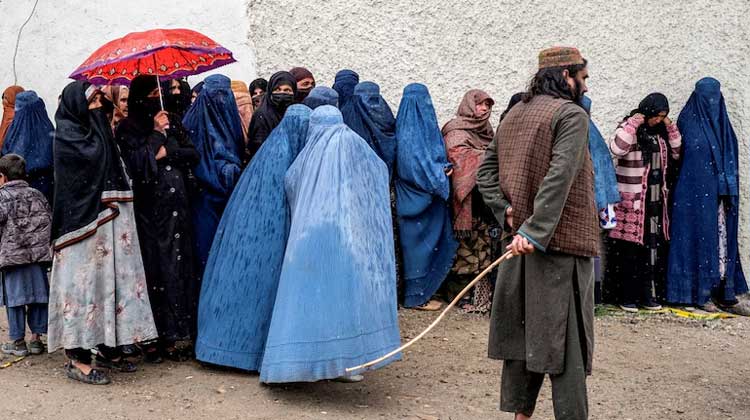
The International Criminal Court (ICC) has issued arrest warrants for two senior Taliban figures — Supreme Leader Hibatullah Akhundzada and Chief Justice Abdul Hakim Haqqani — accusing them of crimes against humanity for the systematic persecution of women and girls in Afghanistan.
In a statement released Tuesday, ICC judges said there are “reasonable grounds” to believe the Taliban leadership committed gender-based persecution by targeting women and girls solely based on their gender. “While the Taliban have imposed broad restrictions across Afghan society, their rules have disproportionately and deliberately stripped women and girls of basic human rights,” the court said.
The charges cover crimes committed from August 15, 2021 — the day the Taliban retook power — through at least January 20, 2025. The court cited a wide range of violations, including bans on female education, employment, movement, and freedom of expression, as well as repression of individuals based on gender identity or perceived sexuality.
The Hague-based ICC, established to prosecute the gravest global crimes, has no enforcement power of its own and relies on member states to execute its warrants — often with limited success. In theory, arrest warrants make international travel risky for the accused, especially to ICC member countries.
Following their return to power in 2021, the Taliban promised a more moderate rule compared to their first regime from 1996 to 2001. However, that pledge quickly unraveled. Girls were barred from secondary and higher education, women were forced out of many jobs, and public spaces such as parks, gyms, and salons were closed to them. Edicts from Akhundzada’s office, ruled from Kandahar, have pushed women out of nearly all aspects of public life.
A decree issued last year even banned women from singing or reciting poetry in public and required that their voices and bodies be “concealed” outside the home. The UN has repeatedly denounced these measures as a form of “gender apartheid.”
When initially requesting the arrest warrants in January, ICC Chief Prosecutor Karim Khan described the Taliban’s treatment of Afghan women and girls as “unprecedented, unconscionable, and ongoing persecution.” He added, “Our action signals that the status quo for women and girls in Afghanistan is not acceptable.”
Khan has also indicated that further warrants for other Taliban officials may soon follow.
Comments are closed.