
India Allows Private Sector to Manufacture Missiles, Artillery, and Ammunition to Strengthen Defence Self‑Reliance

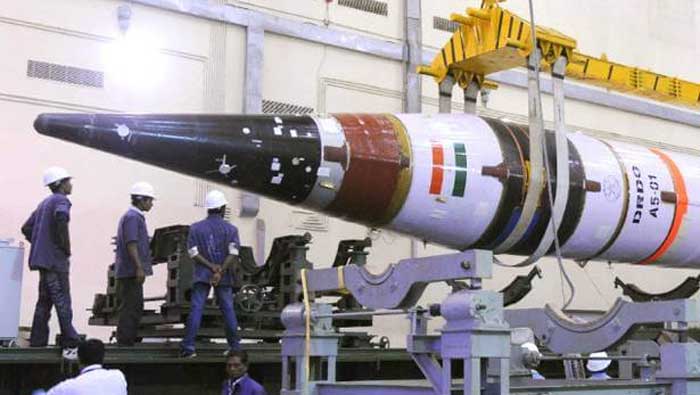
The Defence Ministry has allowed private companies to develop and manufacture missiles, artillery shells, ammunition, and other ordnance, aiming to ensure India does not run short of firepower during prolonged conflicts. The move also aligns with the government’s push for self-reliance, or Atmanirbharta.
According to sources, an amendment to the Revenue Procurement Manual (RPM) removes the mandatory requirement for private manufacturers to obtain a no-objection certificate (NOC) from the state-owned Munitions India Limited (MIL) before setting up ammunition production units. This opens the door for private firms to produce 105 mm, 130 mm, 150 mm artillery shells, Pinaka missiles, 1,000-pound bombs, mortar bombs, hand grenades, and medium- and small-caliber ammunition.
The Defence Ministry has also informed the Defence Research and Development Organisation (DRDO) of its intent to allow private participation in missile development and integration, as state-owned manufacturers like Bharat Dynamics Limited (BDL) alone cannot meet the armed forces’ growing requirements.
The decision comes in the wake of Operation Sindoor, which highlighted the importance of stand-off weapons and long-range conventional missiles. Currently, BDL and Bharat Electronics Limited (BEL) under DRDO are the sole manufacturers of missiles and surface-to-air missile systems such as Akash, Astra, Konkurs, Milan, and torpedoes.
With Pakistan deploying Chinese long-range air-to-air and air-to-surface missiles during Operation Sindoor, the Indian government sees an urgent need for private firms to boost conventional missile production, while DRDO continues to oversee strategic missile development. India aims to expand its arsenal of conventional missiles including BrahMos, Nirbhay, Pralay, and Shaurya, reflecting the shift toward stand-off weapons and advanced anti-missile defence, as experts say the era of traditional fighter-plane dominance is waning.
The capability of India’s S-400 system to intercept a Pakistani ELINT aircraft over 314 km inside Punjab on May 10 during Operation Sindoor demonstrates the growing reliance on long-range missile systems.
Opening the missile and ammunition sectors to private players ensures that India’s armed forces will not run out of critical ordnance in prolonged wars or be forced to purchase supplies at high premiums from foreign suppliers. With global demand surging due to conflicts in Ukraine and Gaza, and Pakistan enjoying a reliable supply from China, this step is seen as crucial for national security and defence preparedness.
Comments are closed.