
Trump officials say Israel’s plans helped lead the US into Iran war

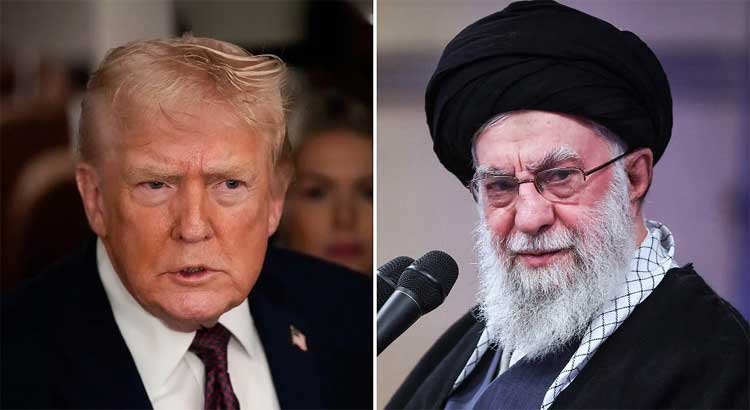
The administration of Donald Trump and its allies in Congress offered a new and evolving justification Monday for the US strike on Iran, with House Speaker Mike Johnson saying the White House believed Israel was prepared to act alone — leaving the president facing what he called a “very difficult decision.”
Johnson spoke after a classified Capitol briefing for congressional leaders, the first since the war began — a joint US-Israel campaign that killed Iran’s Supreme Leader Ali Khamenei and rapidly escalated into a broader Middle East conflict. Hundreds have been killed, including at least six US service members.
Calling the strike a “defensive operation,” Johnson said Israel was ready to move against Iran “with or without American support.” He added that Trump’s team concluded Iran would quickly retaliate against US personnel and assets if Washington did not act first.
“The commander in chief has said this will be short in duration,” Johnson said. “We certainly hope that’s true.”
Administration signals prolonged fight
The shift in rationale comes as hostilities intensify across the region. Trump himself suggested the war could last weeks. Lawmakers said the administration plans to request supplemental funding from Congress — a notable move given Trump’s “America First” pledge to avoid foreign entanglements.
Secretary of State Marco Rubio warned that the “hardest hits are yet to come,” signaling an even more forceful next phase. He described what he called an “imminent threat” with potential ripple effects.
“We knew there was going to be an Israeli action,” Rubio said. “And we knew that if we didn’t preemptively go after them before they launched those attacks, we would suffer higher casualties.”
While saying the US would welcome change in Iran, Rubio stressed regime change was not the mission. “The objective is to make sure they don’t have weapons that threaten us and our allies in the region,” he said.
Defense Secretary Pete Hegseth insisted the campaign would not become an “endless war,” though he acknowledged more US casualties are likely.
Critics question legal basis
Speaking at the White House, Trump outlined four objectives: dismantling Iran’s missile capabilities, crippling its navy, preventing it from acquiring nuclear weapons, and stopping it from backing militant groups abroad. He called the strike “our last, best chance” to eliminate threats posed by the Iranian regime.
Trump has held repeated meetings with Israeli Prime Minister Benjamin Netanyahu in recent months to address Iran’s nuclear program.
But Democrats challenged the administration’s claims. Sen. Mark Warner, the top Democrat on the Intelligence Committee, said there was no imminent threat to the United States — only to Israel. He said he has now heard “four or five” justifications for the strike and urged Trump to present a clear case and exit strategy to Congress and the public.
Sen. Jeff Merkley sharply criticized the move on the Senate floor: “Are we now such an enfeebled nation that Israel decides when we go to war?”
Rep. Adam Smith, the top Democrat on the House Armed Services Committee, said Trump acted unilaterally without making his case to lawmakers or the public.
War powers debate intensifies
Lawmakers are weighing a war powers resolution aimed at limiting Trump’s authority to continue military action without congressional approval. Under the Constitution, Congress alone has the power to declare war — though presidents from both parties have expanded executive authority for limited military operations over time.
Johnson said restricting Trump’s authority now would be “frightening” as he works to defeat the resolution. Even if passed, Congress would likely struggle to muster the two-thirds majority needed to override a presidential veto.
The conflict — dubbed Operation Epic Fury — is already underway with no clear end in sight, marking a stark contrast to earlier US military engagements that followed extended congressional debate.
Uncertain path ahead
As administration officials encourage Iranians to seek new leadership, there appears to be little appetite in Washington for nation-building.
“We would love to see this regime be replaced,” Rubio said. “If there’s something we can do to help them down the road, we’d obviously be open to it. But that’s not the objective.”
Sen. Lindsey Graham, a close Trump ally, dismissed concerns about long-term consequences. “If there’s a threat to America, deal with it,” he said. “That doesn’t mean you own everything that follows.”
Comments are closed.