
Pahalgam terror attack aftermath: One year on, security grid tightens grip across Jammu and Kashmir

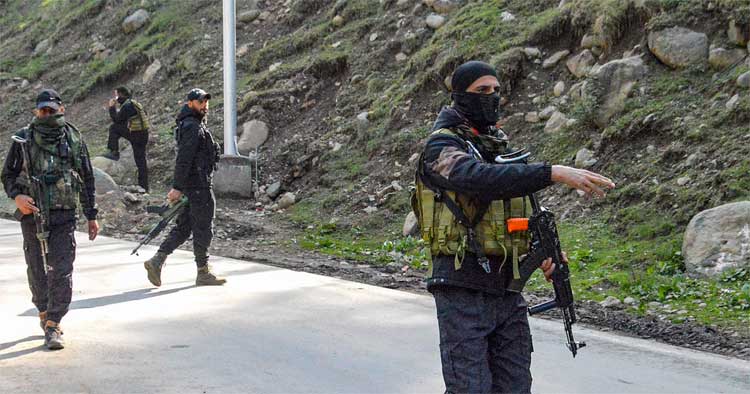
The Pahalgam terror attack, which killed 26 tourists in Baisaran Valley near Srinagar, marked a turning point in India’s counter-terror strategy, triggering a sweeping overhaul of security operations.
One year on: A tighter security grid
Nearly a year later, the security landscape across Jammu and Kashmir has undergone a significant transformation. Forces operating under a unified command have intensified operations against terror networks, while security at tourist destinations has been substantially upgraded.
Several tourist spots that were shut after the attack have reopened with enhanced protection, while others are being restored in phases with improved infrastructure and access.
The shift toward intelligence-led operations has strengthened control over both hinterland and border regions, with a noticeable rise in counter-terror actions across the region and beyond.
Operation Sindoor and a new doctrine
In response to the attack, India launched Operation Sindoor, carrying out strikes on terror infrastructure across the border. The operation laid the groundwork for what officials describe as the “Prahaar Doctrine”—a more aggressive, tech-driven approach to dismantling terror networks.
This framework integrates AI-based intelligence, drone warfare, and monitoring of terror financing, including activity on the dark web.
Along the Line of Control, deployments have been strengthened with enhanced artillery, air defence systems, drones and troop readiness. The Border Security Force has been authorised to raise 16 new battalions—around 17,000 personnel—to reinforce border security.
Joint operations involving the National Investigation Agency, Army, Jammu and Kashmir Police and intelligence agencies have intensified, targeting both active militants and their support networks.
Tourist security overhaul
Security at tourist locations—especially in high-altitude and remote areas—has been comprehensively revamped. Surveillance has expanded through drones and increased patrolling, while the Central Industrial Security Force has been deployed for specialised protection at key sites.
Authorities have reopened several destinations, including Yousmarg, Doodhpathri, Peer Ki Gali, Thajwas Glacier, Wullar and the Srinagar tulip garden. However, Baisaran Valley in Pahalgam remains closed.
Those involved in the attack were tracked and neutralised under Operation Mahadev.
Fresh threat inputs
Security agencies warn that Pakistan-based groups are attempting to regroup, with evolving tactics such as possible kamikaze drone attacks targeting convoys and infrastructure.
Rajnath Singh has cautioned that any such “misadventure” would invite a decisive response.
Expanded counter-terror framework
Over the past year, India has strengthened its counter-terror architecture with greater emphasis on intelligence integration and technology.
The Multi-Agency Centre network has been extended to district levels for real-time intelligence sharing, while systems like NATGRID and the proposed Organised Crime Network Database are enhancing data-driven operations.
The National Security Guard has expanded joint exercises and preparedness for complex scenarios such as hostage rescue and hijack situations.
The bigger picture
A year after the Pahalgam attack, India’s counter-terror posture has shifted decisively—from reactive responses to a proactive, technology-led doctrine—aimed at dismantling threats before they materialise.
Comments are closed.