

Even before the latest conflict, Iran was grappling with deep economic troubles, weighed down by years of sanctions, policy instability, and structural imbalances.
An analysis by Iran Focus following last year’s brief but intense conflict — referred to as the “12-Day War” involving strikes by the United States and Israel on Iranian nuclear facilities — described the country’s economy as severely weakened by overlapping crises. These included energy shortages, stagflation, and disrupted supply chains, all of which have undermined production and trade.
Even before the 2025 war, export performance had deteriorated. Non-oil exports fell sharply, petrochemical shipments dropped significantly, and imports declined, increasing pressure on foreign currency reserves. Iran’s growing reliance on Asian trade partners and widening deficits further fueled inflation.
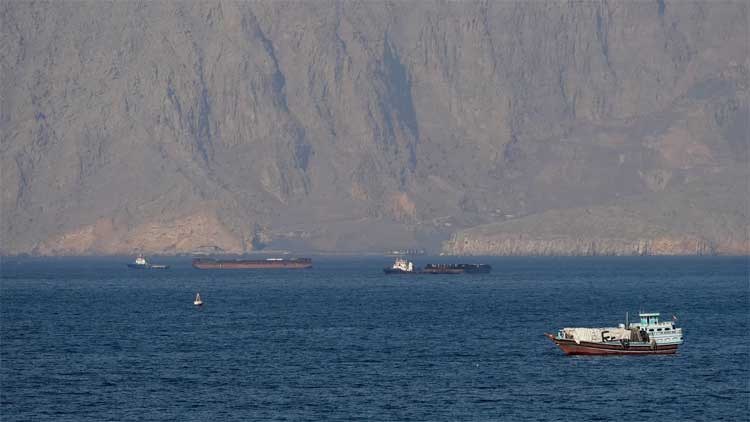
The situation has worsened dramatically since fresh hostilities erupted on February 28, when US and Israeli forces launched new strikes. In response, Iran moved to shut down the Strait of Hormuz — a critical chokepoint for global energy supplies — prompting Washington to deploy a naval blockade aimed at forcing Tehran to reopen the route.
The blockade threatens the backbone of Iran’s economy, as more than 90 percent of its trade passes through the strait. Analysts estimate daily economic losses in the hundreds of millions of dollars, with oil exports — which account for roughly 80 percent of government revenue — taking the hardest hit. Key infrastructure such as Kharg Island, responsible for the bulk of crude exports, has been effectively neutralized.
Beyond immediate losses, the disruption risks long-term damage to Iran’s oil production capacity. With limited storage space, continued output without exports could force shutdowns in aging oil fields, potentially leading to permanent declines in production due to technical issues such as water intrusion.
Domestically, the economic fallout is severe. The Iranian rial has plunged in value, while food inflation has soared into triple digits. With foreign exchange earnings collapsing, policymakers have few tools left to stabilize the economy, raising fears of hyperinflation.
Despite the mounting crisis, political considerations appear to outweigh economic ones. Sanam Vakil argues that the leadership views the conflict as existential, prioritizing regime survival over economic sustainability. Even potential gains from higher global oil prices are unlikely to offset the immense costs of war and reconstruction.
Calls for compromise are growing within Iran. Former Vice President Mohammad Javad Zarif has urged the government to limit its nuclear program and reopen the Strait of Hormuz in exchange for sanctions relief, warning that continued conflict will only deepen damage to civilian infrastructure and livelihoods.
Internal tensions are also emerging, with lawmakers raising concerns about mismanagement of foreign currency and rising prices for basic goods. Economists warn that large sums of export revenue have failed to reach state coffers, further straining public finances.
Looking ahead, analysts say the postwar period will pose even greater challenges. Research from the Royal United Services Institute suggests that long-term economic damage — including weakened infrastructure, reduced industrial capacity, and strained regional ties — may prove more consequential than the war itself.
Relations with Gulf neighbors, particularly the United Arab Emirates, are also likely to suffer lasting damage. The UAE has long served as a vital trade and financial hub for Iran, helping it navigate sanctions. But recent hostilities may disrupt these links, complicating any recovery.
Ultimately, experts warn that Iran faces a prolonged period of economic hardship, with recovery dependent not only on the end of conflict but also on rebuilding international ties and restoring internal stability.
Comments are closed.