
Donald Trump attacks UN climate projections, but scientists say outdated worst-case scenario does not undermine global warming risks

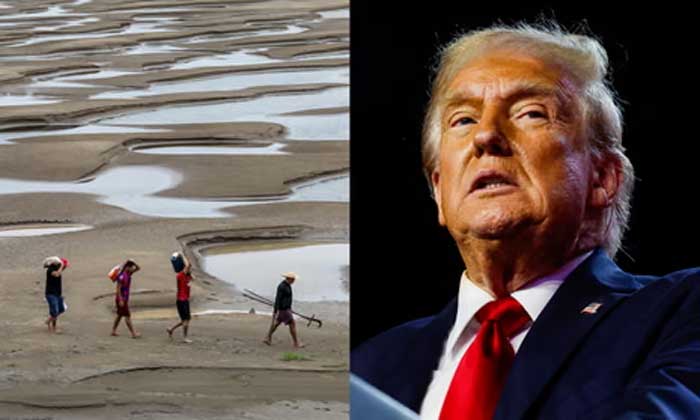
Donald Trump recently criticised long-term climate projections produced by UN-linked scientists, arguing that revised scientific assessments showed earlier global warming predictions had been overstated. However, climate researchers say the changes do not undermine the broader scientific consensus on the risks posed by climate change.
In a post on Truth Social, Trump pointed to revisions involving a climate scenario known as RCP8.5 — a high-emissions projection developed more than a decade ago — and claimed it proved that earlier warnings about climate change had been wrong.
The scenario, originally developed around 2011 by researchers associated with the Intergovernmental Panel on Climate Change, represented a worst-case pathway based on very high future greenhouse gas emissions. Recent scientific work has suggested that this pathway is now considered less plausible due to changes in global energy trends and emissions patterns.
Scientists, however, say that does not mean the threat of climate change has disappeared.
Experts note that RCP8.5 was never presented as the most likely future outcome but rather as a high-risk scenario designed to help policymakers understand potential consequences if the world remained heavily dependent on fossil fuels, particularly coal.
Researchers say the reason the scenario now appears less likely is partly because renewable energy technologies — including solar and wind power, battery storage systems and electric vehicles — have expanded rapidly in recent years. That transition has slowed the pace of emissions growth in many regions.
Climate scientist Detlef Van Vuuren of Utrecht University, who led recent work on future climate pathways, said worst-case scenarios still play an important role in planning.
Such projections help governments evaluate risks from extreme but possible outcomes, particularly in countries vulnerable to climate impacts such as flooding, heatwaves and rising sea levels.
Scientists also stressed that even lower warming scenarios carry substantial risks.
They warn that climate change continues to increase the frequency and intensity of extreme weather events and could push natural systems toward irreversible tipping points, including damage to coral reefs and glacier loss.
Trump also stated that his administration would be guided by “truth, science and fact.” Climate issues have remained a major area of dispute during his presidency.
In 2025, the administration moved to roll back an earlier environmental finding that recognised climate change as a threat to public health. A report used to support the decision later faced criticism from numerous scientists, who argued it contained errors and selectively represented scientific evidence.
The broader scientific view remains that while the most extreme projections may evolve as conditions change, revised models do not invalidate concerns about global warming. Researchers say the shift instead reflects changes in technology and policy that have reduced some of the highest-risk possibilities, while still leaving significant climate challenges ahead.
Comments are closed.