
Passport vs citizenship: MEA statement revives question over proof of Indian nationality

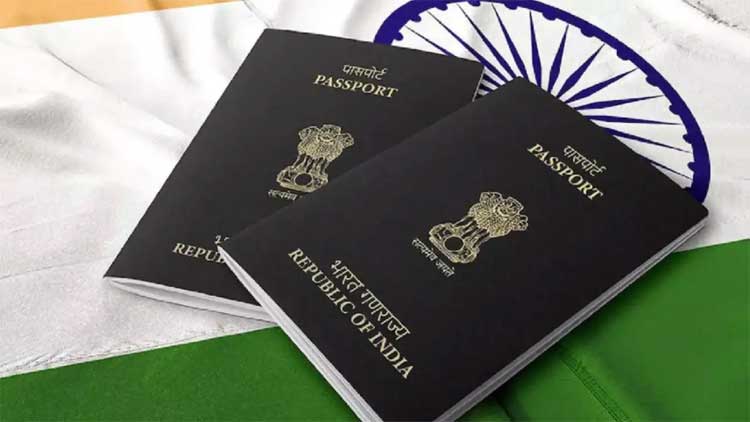
A passport allows an Indian citizen to travel internationally, seek consular assistance abroad and establish identity before immigration authorities. But according to officials of the Ministry of External Affairs, it is not, by itself, a conclusive proof of citizenship.
The clarification made on Wednesday has revived a long-running legal debate in India: if even a passport issued by the government after verification does not definitively establish citizenship, then what document does?
The statement appears surprising because the Passports Act, 1967 — the law governing the issuance of passports — operates on the assumption that the applicant is an Indian citizen.
Under Section 5 of the Act, passport authorities can issue a passport only after examining an application and conducting inquiries deemed necessary. Section 6(2)(a) allows refusal of a passport if the applicant is not an Indian citizen. This means the government verifies citizenship-related claims before issuing the document.
Passports are issued to Indian citizens for international travel after scrutiny of government records and, in many cases, police verification.
The MEA’s position appears to distinguish between a passport being evidence of citizenship and being an absolute legal certificate of citizenship. The government retains the authority to cancel or impound a passport if it later finds that citizenship was falsely claimed or obtained through misrepresentation.
However, the clarification raises a broader question: if a passport issued by the state after verification is not conclusive proof, which document can establish citizenship with certainty?
The voter ID question
The debate gained attention during the recent special intensive revision (SIR) of electoral rolls, where questions emerged over whether existing voters could be asked to provide fresh proof of eligibility.
A voter identity card confirms that a person is registered as an elector, but it does not independently certify citizenship. Under the Representation of the People Act, 1950, only citizens can be enrolled as voters, but election authorities can still examine whether a person meets legal requirements for inclusion in electoral rolls.
As a result, possessing a voter ID card alone may not settle questions about citizenship.
The MEA clarification has expanded this debate further: if voter cards are not final proof of citizenship and passports are also not conclusive, citizens are left asking what document carries that status.
What does Indian law say?
India does not have a single universal citizenship document issued automatically to every citizen.
Citizenship is governed by the Constitution and the Citizenship Act, 1955. A person may acquire citizenship through birth, descent, registration, naturalisation or incorporation of territory.
The government has previously stated that documents such as Aadhaar, passport, voter ID, PAN card or birth certificates cannot individually be treated as definitive proof of citizenship in all cases. Instead, citizenship depends on the legal basis through which a person claims citizenship.
For some people, a birth certificate may be central evidence. Others may rely on parental records, citizenship certificates, passports, school documents, electoral records or a combination of documents establishing identity, lineage and residence.
Courts generally examine the overall evidence rather than treating one document as universally conclusive.
A passport can be strong evidence that the government accepted a person’s citizenship claim. A voter ID indicates that electoral authorities allowed registration. A birth certificate can establish birth but may not answer every citizenship question under changing legal frameworks.
Each document proves a particular fact — but none necessarily resolves every citizenship dispute.
Can India have one definitive citizenship document?
The short answer is no. India has never created a national citizenship card.
Aadhaar does not establish citizenship because it is issued to residents, not only citizens. A PAN card is a tax identification document. A voter card confirms electoral registration. A ration card relates to welfare benefits.
Even passports, despite being among the most thoroughly verified government documents, have generally been treated as strong evidence of citizenship rather than an unquestionable certificate.
The only document specifically meant to certify citizenship is a citizenship certificate issued under the Citizenship Act. However, such certificates mainly apply to those who obtain citizenship through registration or naturalisation and not the vast majority of Indians who become citizens by birth.
A larger constitutional question
The controversy highlights a unique feature of India’s citizenship system.
For decades, the legal framework largely operated on the assumption that most people were citizens unless a dispute arose. Citizenship was therefore established through a combination of records rather than a single foundational document.
That approach has increasingly come under pressure with citizenship verification exercises, electoral scrutiny and migration-related issues.
A person may hold a passport, voter ID, Aadhaar card, PAN card and birth certificate and still face demands for additional evidence if their citizenship status is questioned.
The MEA’s clarification may have been intended as a technical explanation of a passport’s role as a travel document. But it has revived a deeper question about the relationship between individuals and the state: if a passport is not final proof of citizenship, what document ultimately is?
Comments are closed.