
Trump blames Canada for wildfire smoke, but experts say climate change is the real culprit

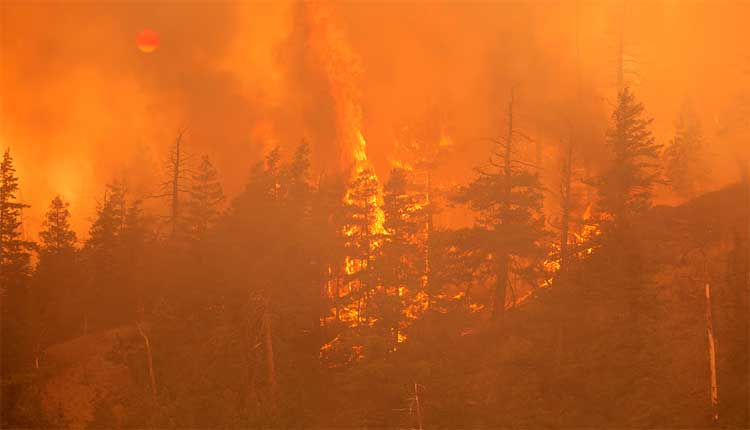
US President Donald Trump has accused Canada of “wilful negligence” over the wildfire smoke drifting into the United States, blaming poor forest management, threatening tariffs and even suggesting Canada should compensate the US. But scientists argue the claims ignore the fundamental driver behind increasingly destructive fire seasons: climate change.
Wildfire smoke does not respect national borders. Fires are burning across North America, with smoke blanketing large parts of Canada and the US, while devastating blazes are also raging in Oregon, the Pacific Northwest, France and Spain. Experts say no amount of logging, raking or prescribed burning can solve what has become a global climate-driven crisis.
Climate change is making wildfires worse
Wildfires require three key ingredients: an ignition source, combustible fuel and weather conditions that allow flames to spread. While lightning and human activity often ignite fires, rising global temperatures are making forests hotter and drier, creating ideal conditions for massive blazes.
Researchers have long linked climate change to worsening fire seasons. A 2024 study found that human-induced warming has made fire seasons comparable to Canada’s record-breaking 2023 wildfire season more than five times more likely across nearly every Canadian ecozone.
Hotter temperatures, earlier snowmelt and longer summers have extended fire seasons and increased the likelihood that a single spark will develop into a catastrophic wildfire.
Forest management has limits
Experts acknowledge that forest management, prescribed burning and better community planning can reduce fire risks in some regions. However, many of Canada’s largest wildfires occur in remote boreal forests, where large-scale intervention is neither practical nor possible.
Measures such as FireSmart communities, resilient infrastructure and science-based forest management can help limit damage, but they cannot eliminate the growing threat posed by a warming climate.
Indigenous burning is not a complete solution
Some observers point to Indigenous cultural burning as a model for reducing wildfire risks. While experts say these traditional practices are highly valuable in appropriate landscapes and deserve greater recognition, they caution that they are adaptation tools—not a cure for climate change.
Cultural burning can reduce fuel loads and lower fire intensity, but it cannot reverse rising temperatures, restore shrinking snowpacks or cool the atmosphere.
El Niño adds to the risk
The strengthening El Niño climate pattern is expected to intensify wildfire conditions over the coming months. According to the US National Oceanic and Atmospheric Administration, there is an 81% chance of a very strong El Niño developing between October and December and a 97% chance it will continue into early 2027.
El Niño is likely to increase drought in some regions, trigger floods in others and raise temperatures worldwide, further elevating wildfire risks in countries such as Canada and Australia.
The long-term solution: Cut emissions
Scientists argue that adaptation alone will not stop worsening wildfire seasons. While improved firefighting, fuel management and resilient communities can reduce losses, only rapid reductions in greenhouse gas emissions can address the root cause.
Researchers say the world must move toward “geological net zero” by dramatically cutting fossil fuel emissions and permanently storing any remaining carbon emissions underground. Emerging technologies such as direct air carbon capture combined with long-term geological storage may eventually play a role, but experts stress these should complement—not replace—rapid decarbonisation.
As wildfire smoke continues to cross borders, scientists warn that the atmosphere responds to cumulative carbon emissions, not politics or national boundaries. Reducing emissions, they argue, remains the only lasting way to curb the growing intensity and frequency of extreme wildfire seasons.
Comments are closed.