
26/11 case: Police seek Interpol help to serve proclamation on Hafiz Saeed, others

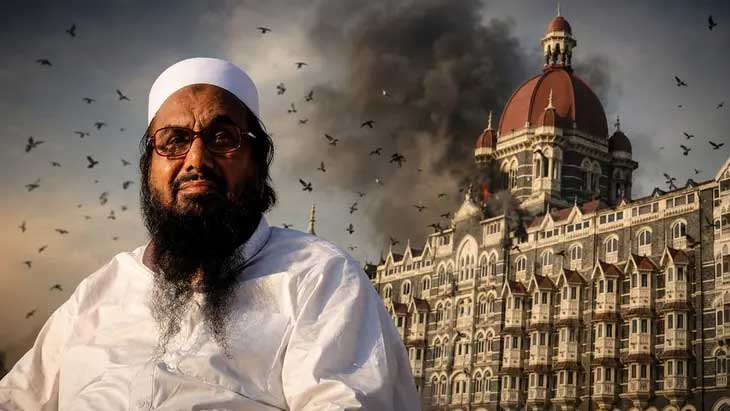
The Mumbai Police have approached the Ministry of Home Affairs (MHA) to serve proclamation orders through Interpol against six absconding accused in the 26/11 Mumbai terror attacks case, including Lashkar-e-Taiba (LeT) founders Hafiz Saeed and Zaki-ur-Rehman Lakhvi. The move could pave the way for their trial in absentia.
Special public prosecutor Ujjwal Nikam, appearing for the Mumbai Police, told the special court on Friday that an interim report had been submitted outlining the steps taken to serve the proclamation order issued in July against the six alleged key conspirators.
“We have written to the MHA for taking necessary steps in serving the proclamation order, through Interpol, against the accused residing in Pakistan,” Nikam said.
According to Nikam, the MHA acknowledged receipt of the proclamation order on August 3 and sought additional time to submit a status report.
The six wanted accused are Saeed, Lakhvi, LeT operations commander Sajid Mir, Abu Alqama, Asim alias Abu Qahafa and Major Abdur Rehman Pasha. Their alleged roles have emerged from the evidence of Ajmal Kasab, the lone Pakistani attacker captured alive, and US terror accused-turned-approver David Coleman Headley, also known as Dawood Gilani. All six are Pakistani nationals and remain beyond the reach of Indian authorities.
The Mumbai Police are seeking to prosecute them under Section 356 of the Bharatiya Nagarik Suraksha Sanhita (BNSS), which permits trials in absentia against proclaimed offenders who have absconded to evade proceedings and whose immediate arrest is not possible.
The provision requires the court to record reasons for proceeding in the absence of the accused and provides safeguards, including the appointment of a lawyer at state expense if the accused has no legal representation. The prosecution can then present its evidence despite the accused remaining absent.
The proclamation process is significant because the court must be satisfied that the accused have deliberately absconded to evade trial and that there is no immediate possibility of their arrest. The law also lays down procedural safeguards before a trial in absentia can commence, including the expiry of the prescribed period after proclamation and 90 days from the framing of charges.
The November 26, 2008, terror attacks killed 166 people, including six Americans, and kept Mumbai under siege for more than 60 hours. The attackers targeted Chhatrapati Shivaji Maharaj Terminus, the Taj Mahal Palace, the Trident hotel and Nariman House.
Kasab was convicted for his role in the attacks and hanged at Yerwada Central Jail in Pune on November 21, 2012.
The special court has fixed September 14 for the next hearing, when the prosecution is expected to submit an updated status report on efforts to serve the proclamation orders on the six wanted accused.
Comments are closed.