
Nepal-China floods: Over 2,400 people now missing

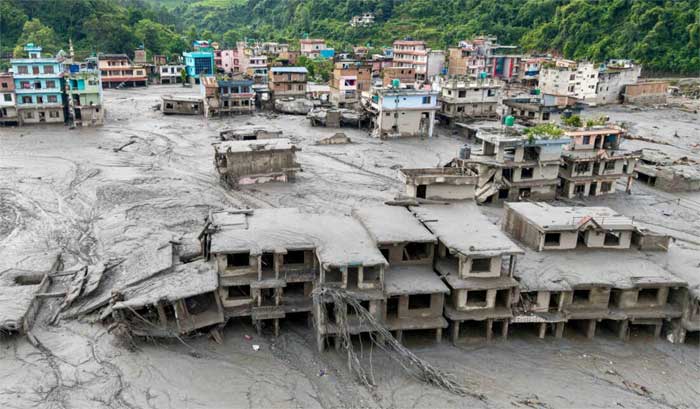
Rescue teams in Nepal and China were racing Saturday to find thousands of people still missing after a deadly wall of water and debris swept through the Himalayan region, destroying villages and claiming hundreds of lives.
The number of missing crossed 2,400 on Friday, while authorities said 586 bodies had been recovered. Some victims were carried downstream into India.
Nepal’s disaster authority added 933 hydropower workers to its missing persons list, alongside trekkers, pilgrims and others caught in the disaster. The Red Cross said the catastrophe may have affected up to 93,000 people, warning that the death toll could rise further.
Survivors described widespread devastation and the painful uncertainty surrounding missing relatives.
“All the settlements near the river were swept away. There is nothing left,” survivor Buddhi Ram Dangol told AFP.
The search has been complicated by the threat of further flooding. The floods triggered by torrents of ice, mud and debris created huge lakes, raising fears that newly formed water bodies could burst and endanger rescue crews.
Nepali police ordered rescuers to move to safety after receiving reports that a water dam had burst on the Tibetan side. China temporarily halted rescue operations in the worst-hit Gyirong area over renewed flooding concerns, although the threat later eased. Chinese state media subsequently reported that two villagers had been rescued.
On the Nepali side, soldiers were working to rescue people trapped inside tunnels at the Trishuli 3A hydropower project. More than 350 workers and residents had been evacuated from the site, while efforts continued to reach over 100 people still trapped.
Nepal reported 579 deaths, while 1,924 people, including 517 foreigners, remained unaccounted for. India recovered seven bodies from rivers flowing from Nepal, believed to be victims of the floods.
In Tibet, seven people were reported dead and 554 missing, according to Chinese state media. Authorities said 555 stranded tourists and 499 Chinese residents had been evacuated.
Among those missing are pilgrims traveling to Mount Kailash, a sacred site in Tibet. Indian pilgrim Sivaranjani Muthunathan, who was traveling with 56 others, said their bus was suddenly engulfed by fog, smoke and surging water after they initially believed they were caught in a traffic jam.
Vehicles around them were swept away or buried under mud as passengers scrambled to higher ground.
The disaster has left thousands of families anxiously waiting for news of loved ones, while survivors face the daunting task of rebuilding communities devastated within minutes.
Comments are closed.