
Tata Sons’ Chandrasekaran Reappointment: What The Shareholding Numbers Reveal

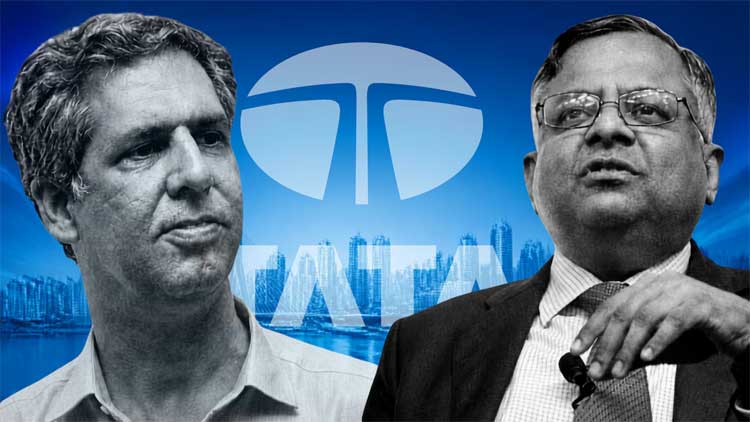
N Chandrasekaran’s bid to secure a third term as chairman of Tata Sons faces a major shareholder hurdle, with the numbers appearing to favour the Tata Trusts bloc opposed to his continuance.
A day after the Tata Sons board backed Chandrasekaran for another term despite opposition from the majority shareholder Tata Trusts, calculations cited by Mint show that the numbers required to approve his directorship may not work in his favour.
The uncertainty comes as Tata Sons’ annual general meeting (AGM) remains in limbo following a regulatory restriction on the Sir Ratan Tata Trust (SRTT), which holds 23.56% of Tata Sons.
With SRTT and five related trusts currently unable to vote, only 72.61% of Tata Sons’ total shares are eligible for voting. Within this active voting pool, the Sir Dorabji Tata Trust (SDTT) bloc and Tata Sons director Noel Tata together account for a 53.6% majority and are opposed to Chandrasekaran’s reappointment.
Tata Trusts Hold Majority Shareholding
Tata Trusts is an umbrella group of 14 philanthropic entities, seven of which hold shares in Tata Sons.
SDTT and SRTT are the two largest shareholders, holding 27.98% and 23.56%, respectively. Together, they control 51.54% of Tata Sons.
The SDTT bloc also includes three smaller trusts that hold shares in Tata Sons: JRD Tata Trust with 4.01%, Tata Social Welfare Trust with 3.73% and RD Tata Trust with 2.19%. Collectively, the SDTT alliance controls 37.91%.
The SRTT bloc includes Tata Education and Development Trust, which owns 3.73%, and Sarvajanik Seva Trust, which holds 0.1%. Together, the SRTT bloc controls 27.39%.
Another philanthropic entity, MK Tata Trust, which is outside Tata Trusts, owns 0.6% of Tata Sons.
Taken together, philanthropic entities hold around 65.9% of Tata Sons.
SP Group, Tata Companies Hold Remaining Shares
The Shapoorji Pallonji family owns 18.38% of Tata Sons, while nine Tata Group companies collectively hold 12.86%.
Seven individuals own the remaining 2.87%.
Noel Tata is Tata Sons’ largest individual shareholder, with a 1% stake. Late industrialist Ratan Tata held 0.83%, while his brother Jimmy Tata owns 0.81%.
Why The Voting Math Matters
SRTT and its five associated smaller trusts, which collectively hold 27.39%, are currently unable to vote following an order by the Maharashtra charity commissioner.
As a result, shareholders representing 72.61% of Tata Sons’ equity form the current voting pool.
Noel Tata has opposed Chandrasekaran’s continuation. His 1% stake, combined with the SDTT bloc’s 37.91%, represents 38.91% of Tata Sons’ total share capital.
Within the 72.61% eligible voting pool, that translates into approximately 53.6% of the votes.
Since Chandrasekaran’s reappointment requires a simple majority of votes cast, the calculation presents a significant obstacle if the current shareholding and voting restrictions remain unchanged.
Tata Trusts Representative Issue
The situation is further complicated by the requirement that SDTT and SRTT jointly nominate a representative to attend Tata Sons’ general meetings.
A Tata Trusts spokesperson said no AGM or general meeting of Tata Sons shareholders can proceed without at least one representative jointly nominated by SDTT and SRTT under Article 86 of the company’s Articles of Association.
The spokesperson also said Tata Trusts hoped the restriction on SRTT would be lifted soon.
Asked whether Venu Srinivasan, a Tata Trusts nominee, retained the authority to decide how SRTT or SDTT would exercise their AGM votes, the spokesperson said he did not.
Dispute Over SRTT Trustees
The current deadlock stems from a Maharashtra charity commissioner order concerning the composition of SRTT.
The commissioner had ruled that permanent trustees cannot constitute more than one-fourth of the total trustees. Three of SRTT’s five trustees—Noel Tata, Jimmy Tata and Jehangir HC Jehangir—are permanent trustees.
Tata Trusts has argued that the rule should apply prospectively and does not affect permanent trustee appointments made before the provision came into force on September 1, 2025.
The dispute has prevented SRTT from taking decisions, including agreeing on a joint representative with SDTT for Tata Sons’ AGM.
Board Decision Faces Shareholder Test
The Tata Sons board’s decision to back Chandrasekaran has already triggered criticism from proxy advisory firm Institutional Investor Advisory Services.
The firm said the board had departed from the principle of shareholder supremacy by proceeding despite the lack of consensus between the two major Tata Trusts nominees.
The firm said the issue was not about determining which side was right, but whether the board should have deferred its decision until the Tata Trusts representatives reached a consensus.
AGM Deadline Extended
The final outcome will depend heavily on when Tata Sons holds its AGM and whether the meeting can legally proceed while SRTT remains restricted from participating.
The Ministry of Corporate Affairs has granted Tata Sons a three-month extension, meaning the company now has until November 18 to hold the meeting.
Tata Sons has not publicly indicated when the shareholder meeting will take place.
For now, the dispute leaves Chandrasekaran’s proposed third term facing a shareholder approval challenge, while the unresolved SRTT issue continues to complicate the governance of Tata Sons.
Comments are closed.