
Nvidia CEO Jensen Huang Disclosed More Extramarital Affairs to Board Before Reinstatement: Report

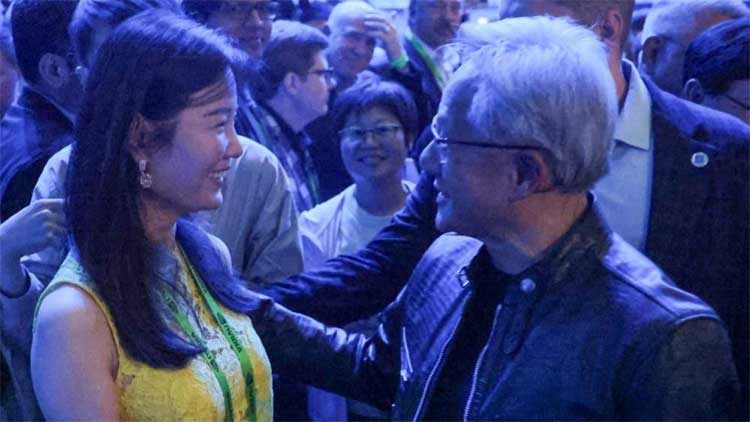
Nvidia CEO Jensen Huang reportedly disclosed additional extramarital relationships to the company’s board of directors before being reinstated as head of the artificial intelligence chipmaker. According to a report by The Wall Street Journal, Huang revealed further details about his personal relationships during an hours-long meeting with board members ahead of their decision to bring him back.
Citing people familiar with the matter, the newspaper reported that Huang discussed affairs beyond those involving Alice Huang, a suspected Chinese intelligence asset, and Kimberly Powell, Nvidia’s vice president of healthcare, who reported directly to him.
Huang reportedly expressed remorse for his behaviour during the meeting. However, the report did not specify how many additional relationships he disclosed or identify the individuals involved.
Reuters had earlier reported that Huang was also involved in an affair with another Nvidia employee whose identity has not been made public. It remains unclear whether this relationship was among those disclosed to the board during Sunday’s meeting.
Huang’s reinstatement followed an 11-day leadership crisis at Nvidia, during which the company’s future leadership and the circumstances surrounding his resignation attracted considerable attention.
Jensen Huang Attends 90-Minute Therapy Sessions Every Day
In his first major interaction with employees after returning as CEO, Huang publicly apologised for his conduct and revealed that he attends therapy sessions for 90 minutes every day.
During an hour-long all-hands meeting at Nvidia’s headquarters, he admitted making serious personal mistakes and acknowledged that his actions had hurt his family and colleagues.
“I made some terrible mistakes,” Huang was quoted as saying by The New York Times.
Referring to his wife of more than 40 years, Lori Huang, he added, “I was unfaithful to Lori, and I hurt my kids and, of course, hurt all of you.”
Huang also acknowledged violating Nvidia’s code of conduct, some of which he had personally helped write. He described his actions as unacceptable and recognised that they had forced the company’s board to reconsider his future at the organisation.
His resignation earlier this month came after allegations about his relationships raised questions about executive accountability and corporate governance.
‘I Was Not Reinstated Because Trump Pressured Nvidia’
Following his return, Huang received an enthusiastic welcome from Nvidia employees, with applause and cheers greeting him at the company’s headquarters.
During the meeting, he also addressed speculation surrounding the circumstances of his reinstatement, rejecting suggestions that he had returned because of his influence in the technology industry or intervention by US President Donald Trump.
Huang reportedly said he was not back because he was a technology executive who considered himself “above the law” or exempt from the company’s code of conduct.
He also dismissed claims that Trump had pressured Nvidia’s board to restore him to the top position.
“That is also completely untrue,” Huang said, according to the report.
He maintained that the board had independently reviewed the situation, gathered relevant information and evaluated the available facts before making its decision. The board had also received assurances from the Trump administration that he did not pose a national security threat.
Huang further clarified that his reinstatement should not be interpreted as permission for other employees to violate company policies.
He stressed that such behaviour would not be appropriate or tolerated, while acknowledging that the board’s decision involved considerations of accountability and forgiveness.
“Sometimes, it’s appropriate to forgive,” he said. “Sometimes it’s not.”
Nvidia Faced 11-Day Leadership Crisis
Huang’s return followed an 11-day period of uncertainty at Nvidia after his resignation. During his absence, Chief Financial Officer Colette Kress took charge of the company’s operations.
The leadership turmoil came at a particularly sensitive time for the technology industry, as Nvidia remains a central player in the global artificial intelligence boom.
The company’s board unanimously accepted Huang’s resignation before subsequently reversing its decision and reinstating him.
The developments also coincided with volatility in technology stocks, with concerns surrounding Nvidia’s leadership adding to uncertainty in the broader AI investment market. Technology shares reportedly rallied following his reinstatement.
Affair Allegations Raise National Security Concerns
The controversy surrounding Huang extended beyond questions of personal conduct and corporate governance.
His reported relationship with Alice Huang, an executive associated with an Nvidia customer, attracted particular attention after US government officials reportedly suspected her of working for Chinese intelligence services.
The allegations raised concerns about potential national security implications given Nvidia’s strategic importance in the global semiconductor industry.
Reports also emerged about Huang’s relationship with a direct report at the company, further intensifying scrutiny of his conduct as chief executive.
Despite the controversy, Nvidia’s board ultimately decided to restore him to leadership following its review.
Huang is also expected to testify at a series of congressional hearings in Washington next week, placing him under further scrutiny over issues surrounding the company and its role in the global technology landscape.
Comments are closed.