
New Zealand Election Result Leaves Parliament Hung, Coalition Talks Set to Begin

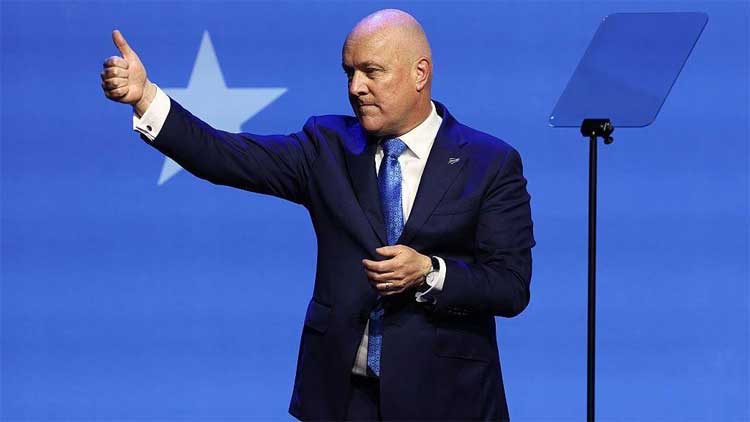
New Zealand’s final election results, released on Friday, have left the country facing a hung Parliament, with neither the right-wing governing bloc nor the left-wing opposition securing enough seats to form a majority government. The outcome is expected to trigger lengthy and potentially difficult coalition negotiations.
The November 7 election initially appeared to deliver a narrow majority to the conservative bloc. However, following the counting of around 400,000 special votes, including ballots cast by New Zealanders living overseas, the Electoral Commission announced that the centre-right National Party, led by Prime Minister Christopher Luxon, had lost two seats.
The final tally gave right-wing parties a combined 65 seats in the 130-member Parliament, one short of the 66 required for a majority. Meanwhile, the opposition bloc, led by Labour Party leader Chris Hipkins, secured 58 seats, gaining one compared with the election-night count.
The results have made the newly elected centrist Opportunity Party a crucial player in determining the country’s next government. Led by 38-year-old business consultant and political newcomer Qiulae Wong, the party won seven seats and remains unaligned with either political bloc.
Although its numbers do not appear sufficient to bring the left-wing opposition to power on its own, Opportunity’s support could prove decisive in negotiations with Luxon’s National Party and its right-wing allies.
Wong has indicated that her party is open to working with either side to form a government. Her emphasis on evidence-based policymaking, political moderation and an end to partisan divisions appears to have resonated with voters, who delivered a significant setback to New Zealand’s traditionally dominant National and Labour parties.
Smaller Parties Gain Ground
The final results also highlighted growing support for smaller parties across the political spectrum. Approximately 2.8 million votes were cast in the election.
Among National’s traditional right-wing partners, the libertarian ACT Party secured 13 seats, while the populist New Zealand First party won 12.
On the opposition side, the left-leaning Green Party obtained 17 seats, one more than its election-night tally. Te Pati Māori, which advocates Indigenous rights, secured five seats.
New Zealand follows a mixed-member proportional electoral system in which voters cast two ballots: one for their preferred political party and another for their preferred local parliamentary candidate.
The country has a single-chamber Parliament and no state-level governments, giving the central government considerable authority over national policy and administration.
Both major parties received less than 30 per cent of the party vote, reflecting voter dissatisfaction with the established political order. National secured 28.35 per cent, while Labour finished slightly ahead with 29.88 per cent.
Despite receiving a smaller share of the party vote, National secured more parliamentary seats because a greater number of its candidates won electorate contests.
Coalition Negotiations Could Prove Challenging
Luxon and National now face a difficult negotiating process as they seek to assemble a four-party governing arrangement involving Opportunity and their existing right-wing partners.
The negotiations could be particularly complicated because Luxon had firmly ruled out working with Wong’s party before the election.
Opportunity’s five key policy demands include stronger action on climate change and an end to bottom-trawling fishing practices. Both positions conflict with the policies of National’s potential coalition partners, ACT and New Zealand First.
The disagreements could make it difficult for the parties to reach a common governing agreement, despite the narrow parliamentary numbers.
Negotiations had not begun before Friday’s announcement, as party leaders were waiting for the final results after the unexpectedly close election-night outcome.
If political parties fail to agree on a coalition arrangement, New Zealand could face another election, prolonging uncertainty over the country’s political leadership and policy direction.
Comments are closed.