
Bhutan Glacial Lake Burst Triggers Flood Warnings in West Bengal and Assam

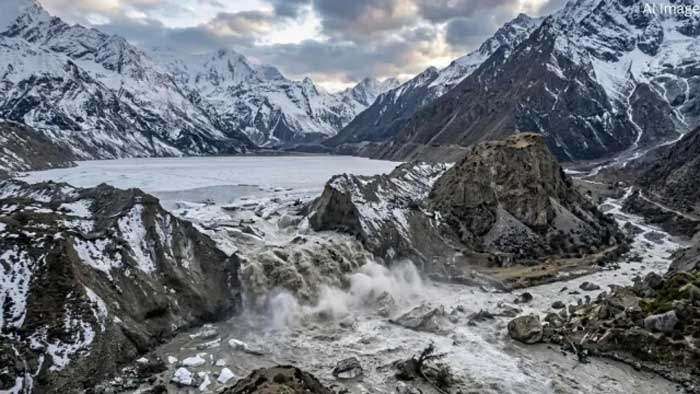
A glacial lake outburst in Bhutan’s Himalayan region has triggered high flood alerts across parts of West Bengal and Assam, prompting evacuation measures and the deployment of disaster response teams as authorities brace for possible flash floods in downstream areas.
The outburst was reported on Thursday evening at Shintaphu Lake in Bhutan’s Gasa district, near Wakila Mountain. The sudden release of water sent floodwaters rushing downstream through the Mo Chhu river system towards the Sankosh River, raising concerns for communities along the riverbanks in neighbouring Indian states.
The incident has also caused significant damage in Bhutan. Facilities at the popular Gasa Tshachu natural hot spring were reportedly washed away, while parts of the road leading to Laya village became impassable. Two portable Bailey bridges were also feared to have been swept away. No deaths or injuries had been reported in Bhutan as the affected area was evacuated before the floodwaters arrived.
North Bengal Districts on High Alert
In West Bengal, authorities have placed vulnerable areas in Alipurduar, Cooch Behar and Jalpaiguri on alert, particularly settlements located along the Sankosh River and its tributaries.
Residents in the Kumargram area of Alipurduar have been urged to move to safer locations as a precaution against a sudden rise in river levels. Warnings have also been issued for parts of the Dooars region, with officials closely monitoring the movement of floodwaters.
State authorities have activated disaster management arrangements and alerted the National Disaster Response Force (NDRF) and State Disaster Response Force (SDRF).
According to reports, thousands of residents in vulnerable areas of Alipurduar have already been moved to safer locations and temporary shelters, including school buildings.
Assam Prepares for Possible Flooding
Neighbouring Assam has also stepped up its preparedness, particularly in Dhubri and other vulnerable districts along the downstream river system.
Authorities have advised residents living near riverbanks and low-lying areas to remain vigilant and follow evacuation instructions. The Sankosh eventually joins the Brahmaputra river system, making the movement of floodwaters a concern for downstream communities.
Disaster management teams are monitoring the situation, while officials remain in contact with their counterparts in Bhutan to assess the potential impact and track changing water levels.
Bhutan Assesses Damage After Lake Outburst
The glacial lake outburst flood has damaged infrastructure around Gasa Tshachu, a popular natural hot spring destination in northern Bhutan. Strong currents and darkness initially hampered the assessment of the damage.
Parts of the Punakha-Gasa highway were also affected, disrupting road connectivity to nearby settlements.
Shintaphu Lake is among 17 glacial lakes in Bhutan identified as potentially dangerous. The latest incident has renewed concerns about the risks posed by glacial lakes in the Himalayan region, particularly for communities living downstream.
The Gasa Tshachu area had previously suffered major flood damage in August 2021, when the swollen Mo Chhu River changed its course.
Authorities Urge Residents to Remain Alert
Officials in both Indian states have urged residents not to panic but to take precautionary measures seriously. People living close to rivers have been advised to avoid riverbanks, suspend unnecessary movement through vulnerable areas and shift to designated safe locations when instructed.
Emergency response teams are continuing to monitor the situation as authorities assess the downstream movement of floodwaters.
Although the full extent of the outburst and its potential impact on Indian territory remain under assessment, the incident has highlighted the importance of cross-border coordination and early-warning systems in managing sudden flooding across the Himalayan river basins.
Comments are closed.