
Bombers Flew Undetected for 18 Hours: Inside the US Stealth Airstrikes on Iran’s Nuclear Sites

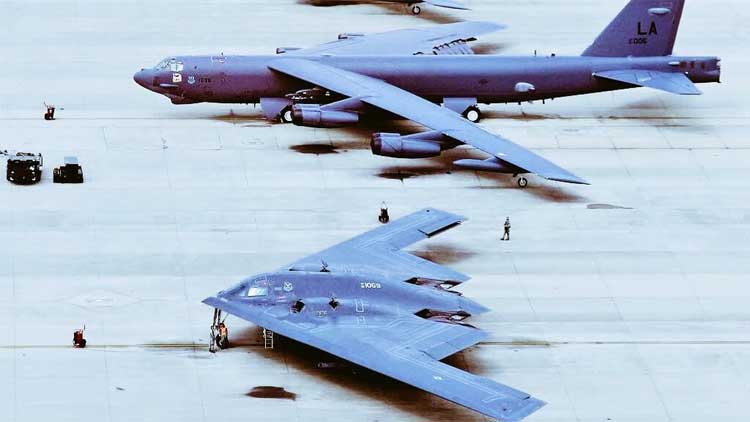
In a dramatic escalation of hostilities, the United States carried out one of its most ambitious military operations against Iran, targeting key nuclear facilities in a precision overnight strike.
According to the Pentagon, the mission involved a fleet of B-2 Spirit stealth bombers that flew undetected for 18 hours from Missouri to Iranian airspace, marking the largest-ever combat deployment of the aircraft.
Dubbed Operation “Midnight Hammer”, the strike commenced on Saturday with a strategic diversion. While one group of B-2 bombers flew toward Guam—diverting the attention of analysts and enemy radar—the real strike force, consisting of seven B-2 bombers, flew east in radio silence, refueled mid-air, and successfully evaded Iranian air defences.
Targeted Nuclear Facilities
The US strike focused on Iran’s core nuclear infrastructure at Fordow, Natanz, and Esfahan. The assault was highly coordinated and multi-pronged:
-
Over two dozen Tomahawk cruise missiles were launched from a US submarine in the region.
-
American fighter jets flew decoy missions ahead of the bombers.
-
Each B-2 aircraft dropped a GBU-57 Massive Ordnance Penetrator, a 30,000-pound bunker-buster bomb capable of penetrating hardened underground nuclear sites.
“Spectacular Military Success”
US Defence Secretary Pete Hegseth described the operation as a “spectacular military success,” revealing that over 125 aircraft participated in the mission. General Dan Caine, Chairman of the Joint Chiefs of Staff, added, “Iran’s fighters did not fly, and it appears their air defence systems failed to detect our presence. We retained total surprise.”
Preliminary assessments by the Pentagon suggest Iran’s nuclear sites suffered extensive damage. While officials stopped short of declaring the complete dismantling of Tehran’s nuclear programme, Hegseth said the strikes had “devastated Iran’s nuclear capabilities.”
Region on Edge as US Military Readiness Rises
Following the operation, the US heightened military alertness across the Middle East. Force protection measures were increased, allied forces placed on high alert, and key assets repositioned in anticipation of potential Iranian retaliation.
Despite the scale of the assault, US officials stressed that Washington does not seek a broader war. However, Hegseth warned that further military action would follow any provocation, reinforcing President Trump’s message, posted on social media shortly after the strike was executed.
“Iran would be wise to heed those words,” Hegseth said. “The President has said it before, and he means it.”
The operation—carefully planned over months but finalized in weeks—signals a new phase in the Iran-Israel conflict, with the United States now deeply involved and Tehran left to reckon with a severely impaired nuclear programme.
Comments are closed.