
Climate change could trigger extreme river flow swings, threatening global freshwater biodiversity

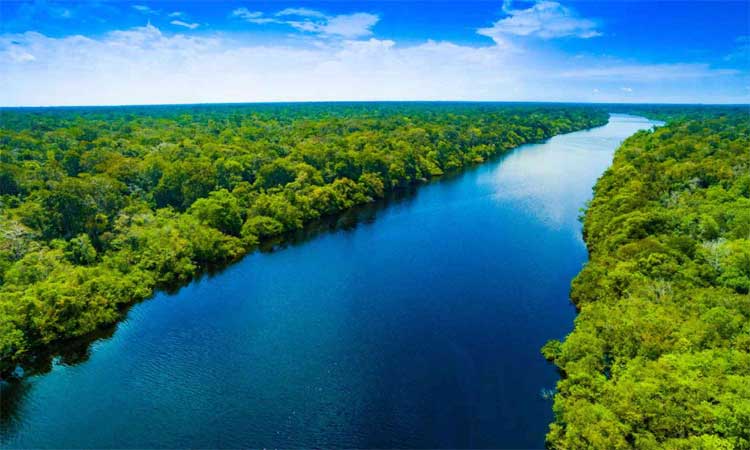
Climate change may dramatically disrupt the world’s major rivers, causing extreme fluctuations in water flow that could exceed historical levels by more than five times and put freshwater ecosystems under severe strain.
Scientists warn that these sharp swings — alternating between unusually low flows and sudden surges — could destabilize habitats, increase flood risks, and leave fish populations stranded in increasingly unpredictable river systems.
River flow patterns are shifting
Researchers studying 32 major downstream river monitoring points found that future climate scenarios could significantly alter the flow patterns that aquatic species depend on for survival.
The study, led by Qiusheng Ma of the Northeast Institute of Geography and Agroecology, linked changing river flows to declines in habitat diversity.
Instead of maintaining regular seasonal rhythms, many rivers are projected to experience disrupted patterns — with some losing predictable flow cycles and others seeing intensified wet-season surges.
For fish and other aquatic life, survival depends not just on water volume, but on the timing, depth and speed of flow.
Habitat stability at risk
River ecosystems rely on balance.
Rapid surges can erode riverbeds and destroy spawning grounds, while prolonged low flows shrink side channels and reduce shelter for eggs, insects and juvenile fish.
Scientists have long identified flow timing, duration and frequency as critical to maintaining aquatic habitats.
When climate change disrupts those natural cycles, rivers may remain geographically intact while losing the ecological systems that sustain life within them.
Measuring biodiversity decline
To assess ecological health, researchers used the Shannon index, a widely used biodiversity metric that measures both species variety and population balance.
Higher scores indicate rich, stable ecosystems, while lower scores suggest shrinking and less diverse communities.
Because long-term fish surveys are scarce across many of the world’s largest rivers, the researchers used flow-based ecological modelling as a proxy to estimate biodiversity trends.
Future depends on human choices
The study examined three climate development pathways, each reflecting different levels of warming, land-use change and environmental protection.
The results were stark:
- Even under the most moderate scenario, more than half of rivers showed biodiversity losses
- Under higher-emissions pathways, that figure rose to around two-thirds
The steepest declines occurred under a scenario marked by weak environmental safeguards and uneven development, highlighting how policy decisions can amplify climate-related damage.
Many rivers already degraded
The warning signs are not confined to the future.
Researchers found that biodiversity had already declined across nearly 90 percent of the 32 rivers studied during the second half of the 20th century.
Among the hardest-hit were:
- The Paraná River
- The São Francisco River
- The Yellow River
- The Yangtze River
In many cases, future improvements may not be enough to reverse decades of ecological damage.
Not all rivers face the same fate
The outlook varies significantly across regions.
Some rivers — including Africa’s Congo River and Niger River — showed signs of resilience in several climate scenarios.
Others, such as Europe’s Rhine and Volga River, were projected to decline consistently.
These differences suggest conservation strategies must be tailored to individual river systems rather than applied uniformly.
Rising temperatures add another threat
Changing flow is only part of the problem.
Warmer water temperatures reduce oxygen levels and can push fish beyond their physiological limits.
Separate freshwater studies indicate that under higher warming scenarios, more than one-third of fish species could face severe habitat stress across large portions of their range.
Rivers face multiple pressures
Climate change compounds existing threats such as:
- Dams blocking migration routes
- Water withdrawals exposing nursery habitats
- Agricultural runoff and pollution
- Urban expansion
Together, these stressors can magnify ecological decline.
Protecting rivers through smarter flow management
Researchers say one of the most effective responses is restoring environmental flows — managing water releases to mimic natural seasonal pulses.
Potential measures include:
- Controlled dam releases
- Floodplain restoration
- Reconnecting fragmented habitats
- Maintaining fish migration corridors
While these steps cannot fully offset climate change, they can help preserve ecosystem stability.
A warning system for the future
The study underscores a critical point: river biodiversity depends not just on how much water flows, but on when it arrives and how violently it moves.
Scientists say monitoring these shifts alongside fish surveys, temperature data and local ecological knowledge could provide an essential early-warning system for protecting freshwater life in a warming world.
Comments are closed.