
Climate change is accelerating mercury release from Antarctica

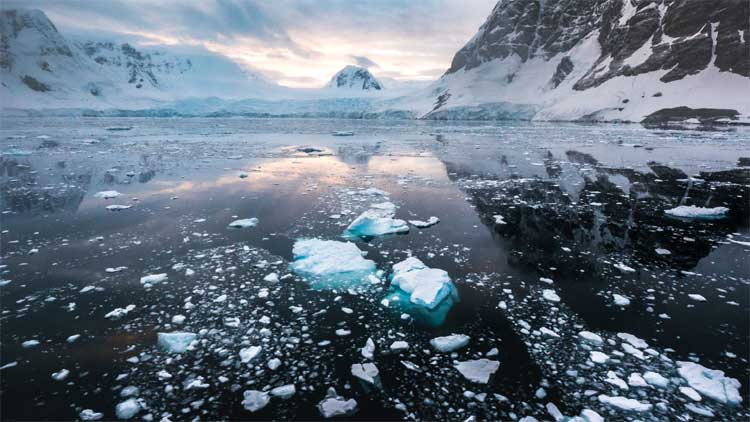
Antarctica, one of the most remote and inhospitable places on Earth, is accumulating mercury at an accelerating rate as human emissions increase and climate change causes its ice to melt, according to a new study.
The research, published in the Proceedings of the National Academy of Sciences, found that Antarctica’s ice sheet is releasing increasing amounts of mercury that had been trapped in ice and sediments. Together with mercury arriving through the atmosphere, the process is turning the continent from a long-term mercury sink into an emerging source of pollution.
“Climate change acts as an amplifier of mercury cycling,” said Maodian Liu, an environmental scientist at Peking University and co-author of the study.
Mercury accumulation surges
Mercury reaches Antarctica through the atmosphere, travelling from sources including coal-fired power plants and mining operations before settling on the continent’s ice and surrounding waters.
To understand how mercury accumulation has changed, Liu and his colleagues analysed 16 sediment cores collected from the continental shelf off the Antarctic Peninsula. The cores provided a record of mercury deposition stretching back about 200 years.
Nearly all the samples showed a significant increase in mercury accumulation since industrialisation began in the mid-18th century. On average, mercury accumulation in the region increased by 160%, with the rise accelerating particularly sharply from the 1950s onward.
The researchers also used simulations of the global mercury cycle to estimate how much mercury was being released by melting Antarctic glaciers. They found that mercury releases from glaciers had increased by about 550% since industrialisation.
The study estimated that roughly 56% of the mercury found in the Antarctic Peninsula seafloor sediments came from the atmosphere. The remainder was likely released through glacier melt, weathering and erosion of Antarctic ice and sediments.
Melting ice releases ‘legacy mercury’
The researchers said climate change is not only increasing the amount of meltwater flowing from glaciers but is also releasing mercury that had accumulated in Antarctic ice over decades.
Similar processes are being observed elsewhere. In the Arctic, thawing permafrost is releasing previously trapped mercury into ecosystems, while stronger storms in parts of the United States are accelerating erosion and mobilising metals and nutrients.
Charles Driscoll, an environmental engineer at Syracuse University who was not involved in the study, said the findings add to evidence that climate change is altering the global mercury cycle.
Why methylmercury is a concern
The biggest concern is what happens after mercury reaches Antarctic sediments. It can be converted into methylmercury, a far more toxic form that can accumulate in living organisms.
Methylmercury can enter the Antarctic food chain through plankton and move upward to krill, fish, seabirds and marine mammals. At high concentrations, it can affect the nervous system, behaviour, growth and reproduction of animals.
The pollution could also have implications for humans because some Antarctic fish and krill are harvested commercially.
Researchers say more work is needed to determine how much mercury in Antarctic waters is converted into methylmercury. The process generally occurs more rapidly in warmer conditions.
The study also raises questions about how representative the findings from the Antarctic Peninsula are for the rest of the continent.
Even if global mercury emissions from coal combustion, mining and other human activities decline, mercury already stored in Antarctic ice could continue to enter the environment as the continent warms and ice melts. This means the environmental burden of mercury may not fall immediately even after emissions are reduced.
Comments are closed.