
European Union hosts Mohamed Mustafa for talks on security and peace in Gaza and the West Bank

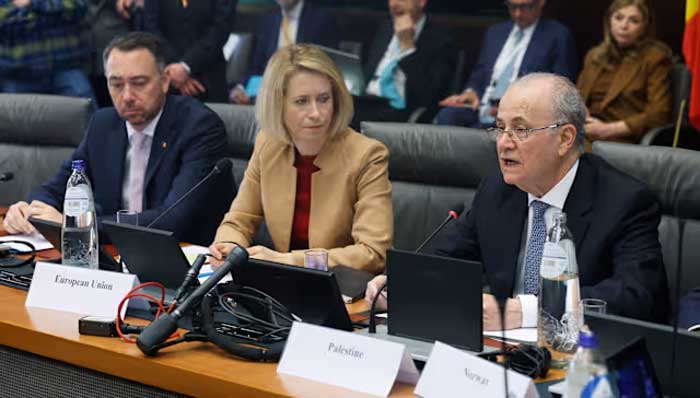
Representatives from over 60 countries are gathering in Brussels for talks with Palestinian Prime Minister Mohamed Mustafa on stability, security, and long-term peace in Israel, the West Bank, and Gaza, even as global attention remains fixed on crises in Iran and Lebanon.
Ahead of the meeting, Belgian Foreign Minister Maxime Prévot warned that ongoing violence in the West Bank and devastation in Gaza are undermining prospects for a two-state solution. Co-hosting the talks with EU foreign policy chief Kaja Kallas, he said the path to peace is becoming more difficult but remains the only viable option for lasting regional stability.
The European Union—the largest donor to the Palestinian Authority led by Mahmoud Abbas—is keen to maintain a central diplomatic role, even as it steers clear of initiatives like the peace board proposed by Donald Trump, instead backing multilateral frameworks such as the United Nations.
Growing outrage in Europe over the humanitarian crisis in Gaza has led several EU leaders to criticise Israel’s military actions and increase pressure on Prime Minister Benjamin Netanyahu. With the recent exit of Viktor Orbán, a key ally of Netanyahu, the bloc may now have greater scope to consider stronger measures, including sanctions on Israeli settlers or scaling back ties.
Meanwhile, Palestinians in the West Bank accuse Israel of tightening control under the cover of the Iran conflict, pointing to rising settler violence and stricter movement restrictions.
Addressing the gathering, Mustafa called for unified governance in Gaza under a single authority, coordinated security efforts, the gradual disarmament of armed groups, and a full Israeli withdrawal from the territory.
Comments are closed.