
Global Leaders to Reassert Climate Commitment at Amazon Talks

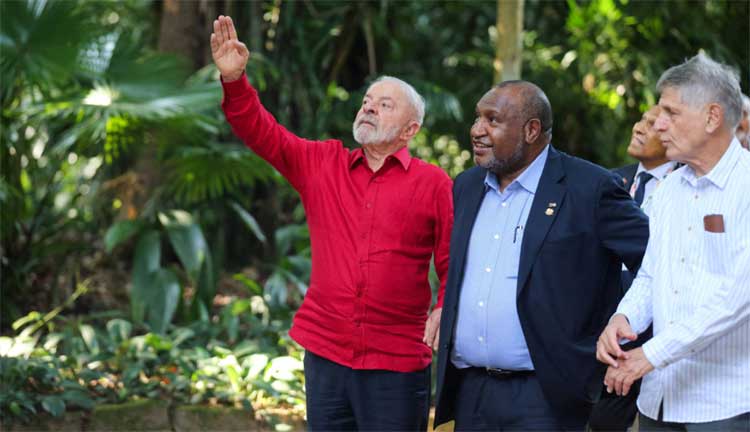
World leaders are gathering in the Brazilian Amazon on Thursday in a bid to prove that the global fight against climate change is still alive, even as past pledges go unfulfilled and the United States pointedly skips the meeting.
Around 50 heads of state and government are expected in the rainforest city of Belém for the two-day summit, held just ahead of the UN’s annual COP climate talks starting next week. Nearly every country will be represented, but Washington’s absence — after US President Donald Trump dismissed climate science as a “con job” — is casting a long shadow.
British Prime Minister Keir Starmer and French President Emmanuel Macron are among those set to attend, while other major powers such as China and India are sending ministers instead of top leaders.
Belém, a city of 1.4 million where half the residents live in low-income favelas, has faced criticism over limited infrastructure and soaring hotel prices that have made attendance difficult for small delegations and NGOs. Despite hurried renovations and new buildings, parts of the COP venue were still under construction when media and advance teams arrived on Wednesday.
Still, many locals see the spotlight as overdue. “The COP is bringing Belém the recognition it deserves,” said 34-year-old makeup artist Karol Farias while shopping in the newly refurbished Ver-o-Peso market.
A Summit of Symbolism
Brazil is not aiming for a major breakthrough at COP30, but wants to send a message that global climate cooperation has not collapsed. Yet the challenges are hard to ignore — from the absence of the US to Brazil’s own approval of offshore oil drilling near the Amazon River.
The lack of new climate pledges, the UN’s warning that the 1.5°C target will be missed, and the scramble to house delegates from poorer countries underscore the uphill task. Organizers have even arranged free cabins on cruise ships for the most cash-strapped delegations.
With wars, economic strain, and political backlash against green policies dominating global priorities, momentum is fragile. Last month, an effort to curb emissions from the global shipping sector failed under pressure from the US — a sign of how difficult consensus has become.
“What leaders do here needs to translate into a strong mandate for ambition,” said Carolina Pasquali of Greenpeace Brazil, speaking from the group’s ship, the Rainbow Warrior, docked in Belém.
‘Time to Implement’
Brazil is reframing the summit as a moment to enforce past commitments rather than announce new ones.
“Enough talking — it’s time to implement what we already agreed,” President Luiz Inácio Lula da Silva declared.
Brazil is pushing for a global fund to reward rainforest-rich nations for conservation, and is putting fresh emphasis on climate adaptation — a top concern for countries already facing rising seas and extreme weather.
“This isn’t charity. It’s necessity,” said Evans Njewa of Malawi, chair of the Least Developed Countries bloc, which is calling for climate finance to reach $1.3 trillion annually by 2035.
With the world on track for 2.5°C of warming even if current pledges are met, vulnerable nations say there is no room for delay.
“For many of our countries, adaptation alone won’t save us in a world that exceeds two degrees,” warned Ilana Seid of Palau, chair of the Alliance of Small Island States.
Many want the summit to confront fossil fuels directly. Lula has said Brazil will propose a “roadmap to reduce fossil fuels,” but acknowledged the political difficulty: “It will not be an easy conversation.”
Comments are closed.