
Hidden tunnels and fake doors uncovered in China probe into mine disaster that killed 82

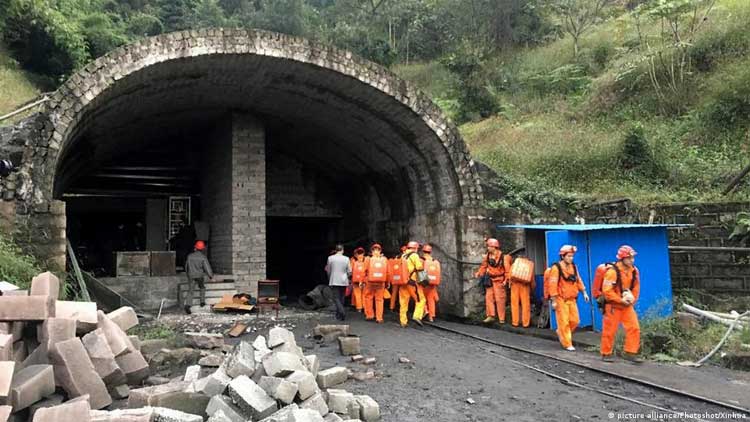
Unmarked tunnels, missing worker trackers and fake tunnel doors have emerged in an initial probe into China’s deadliest mining disaster in more than 15 years, with authorities pledging a thorough investigation, state media reported Tuesday.
At least 82 people were killed in a gas explosion late Friday at the Liushenyu coal mine in northern China’s Shanxi province. Two people remain missing and 128 others are hospitalized, according to state media. The disaster is China’s deadliest mining accident since a 2009 gas blast at the Xinxing mine in Heilongjiang that killed 108 workers.
Although investigators are still determining the cause of the explosion, state-run Xinhua reported that concealed tunnels, falsified mine plans and the use of unregistered subcontracted workers without mandatory location trackers contributed to the scale of the tragedy.
The Liushenyu mine, operated by Shanxi Tongzhou Coal Coking Group, allegedly maintained two sets of maps and surveillance systems — one reflecting actual operations and another for inspectors. Some mining areas were reportedly hidden from regulators, while coal extracted from the concealed tunnels was omitted from official production figures and taxation records. Such dual systems are informally known as “yin-yang drawings” — one version for public scrutiny and another kept hidden.
State media said workers concealed tunnel entrances using wire mesh and plastic sacks coated with mortar to create fake rock walls. Employees were allegedly alerted ahead of inspections, allowing them to close off hidden sections and disguise them with coal dust.
Investigators also found that subcontracted workers in the concealed tunnels had not been issued mandatory identification trackers or entered into official underground records. CCTV footage showed only 124 workers listed underground at the time of the blast, though 247 were actually inside the mine — leaving 123 workers outside official monitoring systems.
The lack of accurate maps and worker location data has complicated rescue efforts. State media also reported that the mine, classified as high-risk because of elevated gas levels, avoided installing required gas-monitoring equipment.
Authorities had previously flagged safety violations at the mine. Xinhua reported that regulators fined the operator in 2025 after discovering concealed work areas, but illegal production allegedly continued despite the penalties. Following the disaster, several mines across China have suspended or reduced operations for safety inspections.
Comments are closed.