

Diseases once rare in the United States are increasingly appearing in states like Florida, Texas and California — and researchers say the answer may lie in Peru.
A new study by scientists from Stanford University and partner institutions links a 2023 cyclone and coastal El Niño event in Peru to a massive outbreak of Dengue fever, underscoring how climate change is already fueling the spread of infectious diseases.
Climate change driving outbreaks
Published in One Earth on March 17, the study found that warmer temperatures and heavy rainfall significantly increased dengue transmission. Researchers estimate that about 60% of cases in the worst-affected districts — roughly 22,000 infections — were directly linked to extreme weather conditions during the cyclone.
Dengue, spread by Aedes aegypti and Aedes albopictus, has surged more than tenfold globally since 2000, according to the World Health Organization.
The mechanism is clear: heavy rains create stagnant water where mosquitoes breed, while warmer temperatures accelerate their life cycle and the virus’s transmission.
Extreme weather now more likely
Climate modelling by Stanford scientists shows that extreme rainfall events like those seen in Peru in 2023 are now about 31% more likely than in pre-industrial times. When combined with rising temperatures, the likelihood of conditions that fuel dengue outbreaks has nearly tripled.
Researchers say this is among the first studies to precisely quantify how climate change amplifies a specific disease outbreak tied to a single extreme weather event.
A growing global risk
The findings highlight an urgent need for action, as similar conditions could trigger outbreaks elsewhere — including in parts of the United States where dengue was historically uncommon.
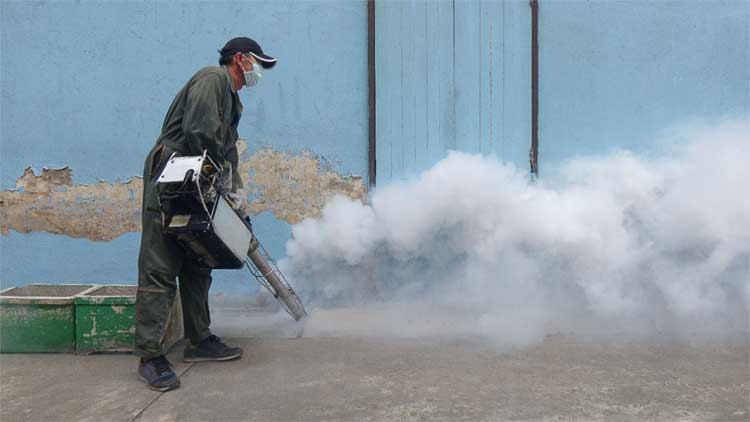
Experts say targeted mosquito control, vaccination in high-risk areas, and improved urban infrastructure — such as drainage and water systems — could help reduce the risk.
The study also suggests that similar analytical approaches could be used to predict disease risks linked to hurricanes, monsoons and other extreme weather events worldwide, helping governments prepare before outbreaks spiral.
Comments are closed.