
India-bound oil tanker slips through Strait of Hormuz after going ‘dark’ amid Iran–Israel–US conflict tensions

An India-bound crude oil tanker slipped through the conflict-hit Strait of Hormuz after briefly going “dark” to avoid detection, becoming the first vessel headed to India to safely navigate the strategic waterway since fighting erupted between the United States, Israel and Iran late last month.
The Liberia-flagged Shenlong Suezmax oil tanker, carrying Saudi crude and captained by an Indian, berthed at Mumbai Port on Wednesday evening after crossing the volatile waterway, where maritime traffic has largely stalled due to attacks and military activity.
The tanker loaded crude at Ras Tanura Port in Saudi Arabia on March 1 and sailed two days later. Maritime tracking data showed its last signal inside the Strait of Hormuz on March 8 before it disappeared from monitoring systems — suggesting the crew had switched off the vessel’s Automatic Identification System (AIS) while navigating the dangerous stretch.
The ship reappeared on tracking databases the next day after clearing the strait and reached Mumbai at about 1 pm on Wednesday, according to port officials.
“The ship Shenlong is carrying 1,35,335 metric tonnes of crude oil. She is berthed at Jawahar Dweep Terminal and has started discharging the cargo,” said Praveen Singh, deputy conservator of the Mumbai Port Authority. The crude will be supplied to refineries in Mahul in eastern Mumbai.
The vessel, owned by Shenlong Shipping Ltd and managed by Athens-based Dynacom Tanker Management Ltd, has a crew of 29, including Indians, Pakistanis and Filipinos, and is commanded by Captain Sukshant Singh Sandhu. Officials said unloading the cargo is expected to take about 36 hours.
How ships ‘go dark’
“Going dark” in maritime terms refers to a vessel switching off its Automatic Identification System (AIS), which normally broadcasts the ship’s identity, location, course and speed to other ships and monitoring authorities.
Ships usually do this only in exceptional situations because international maritime rules require AIS to remain active for safety and tracking. However, in conflict zones such as the Strait of Hormuz during war, vessels are sometimes allowed to temporarily switch off their transponders to avoid being tracked or targeted.
The tactic reduces the risk of attacks amid widespread signal jamming, spoofing and missile strikes reported in the region.
Attacks and stranded ships
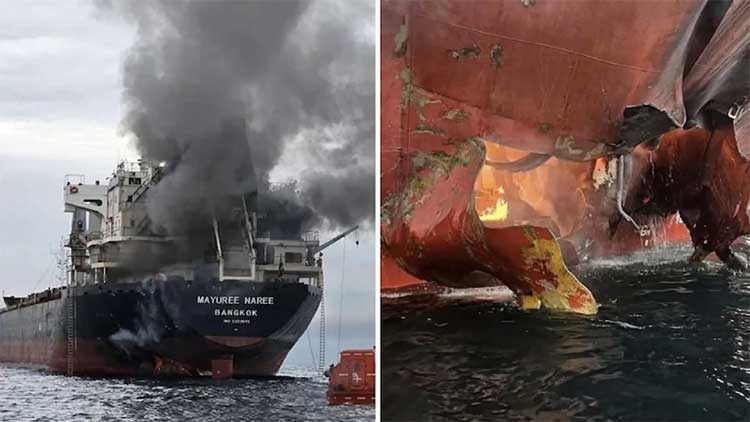
A Thai bulk carrier, Mayuree Naree, was hit by projectiles while transiting the strait shortly after leaving the United Arab Emirates. The ship, bound for Kandla Port in India, caught fire. Three crew members remain missing while 20 others were rescued by the Royal Thai Navy and authorities in Oman.
Maritime traffic through the Strait of Hormuz — the narrow channel between Iran and Oman that handles more than 20 million barrels of oil a day — has slowed sharply as ships queue outside the region or divert to alternative routes.
Comments are closed.