
India–United States trade talks begin in Washington today, Donald Trump tariffs in focus

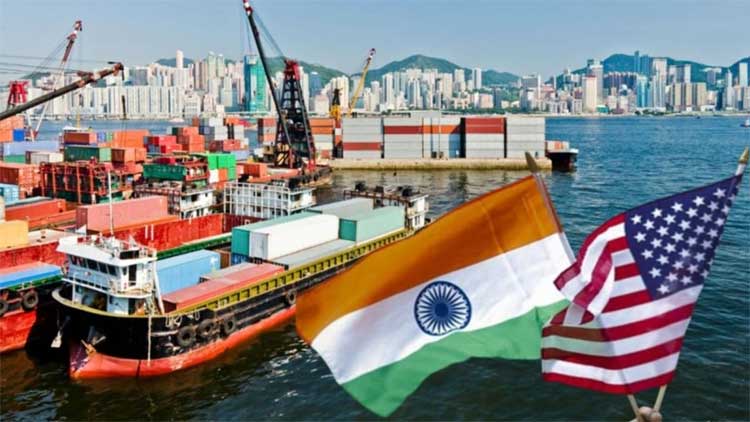
India and the United States are set to begin a fresh round of high-stakes trade negotiations in Washington from April 20 to 22, aimed at finalising the first phase of a proposed Bilateral Trade Agreement (BTA).
A 12-member Indian delegation led by chief negotiator Darpan Jain will hold in-person talks with US officials—marking the first such meeting since October 2025.
Key points on the India–US trade talks
- The three-day negotiations in Washington will involve officials from India’s commerce, customs and external affairs ministries.
- The talks follow a major reset in US trade policy after the US Supreme Court struck down sweeping reciprocal tariffs imposed under the International Emergency Economic Powers Act (IEEPA).
- In response, Washington introduced a temporary flat 10% tariff on imports from all countries for 150 days starting February 24.
- This uniform tariff has triggered renegotiations, as India had earlier secured preferential terms with duties reduced from as high as 50% to around 18%, including removal of a 25% penalty tied to its purchase of Russian oil.
- With the deal yet to be signed, New Delhi now has room to revisit and recalibrate commitments to ensure it is not disadvantaged under the revised tariff regime.
- A key goal for India is to restore the cost advantage its exporters previously enjoyed in the US market.
- Under earlier proposals, India had offered concessions such as lowering tariffs on US industrial goods, reducing duties on agricultural imports (including nuts, fruits, soybean oil, and wine), and easing non-tariff barriers—many of which may now be reconsidered.
- India had also indicated plans to import up to $500 billion worth of US goods over five years—covering energy, aircraft, semiconductors, precious metals and coal—an aspect likely to be reassessed.
- Ongoing investigations by the US Trade Representative under Section 301, targeting alleged excessive manufacturing capacity in countries including India, are expected to be a key sticking point. India has strongly opposed these probes.
- The current round effectively resets negotiations that were delayed earlier due to global tariff disruptions, taking place in a significantly altered trade environment.
Changing trade dynamics
The talks come amid shifting global trade trends. China has overtaken the US as India’s largest trading partner in 2025–26. While India’s exports to the US rose slightly to $87.3 billion, imports surged nearly 16% to $52.9 billion, narrowing the trade surplus to $34.4 billion.
The outcome of these negotiations is expected to play a crucial role in shaping future economic ties between the two countries.
Comments are closed.