
Indian Green Card applicants could face waits of up to 179 years: Analysis

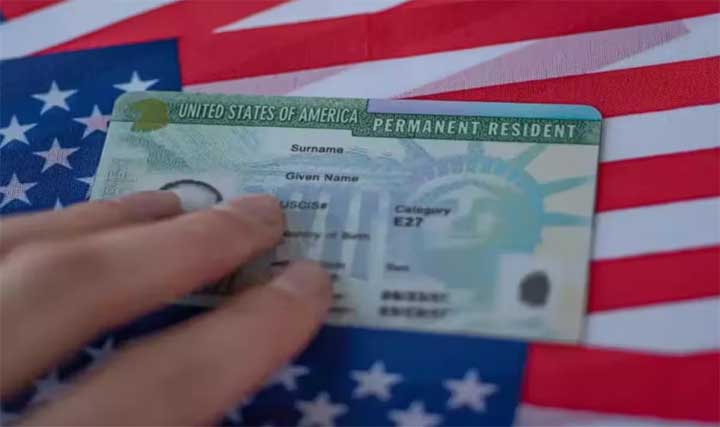
Indian professionals seeking US green cards could face extraordinarily long waits, with a new analysis estimating that some applicants may have to wait as long as 179 years in certain employment-based categories.
According to the National Foundation for American Policy (NFAP), nearly one million Indians are currently caught in the employment-based green card backlog, accounting for about 79% of all applicants waiting in line.
The nationality-based annual limits on green cards have disproportionately affected Indian professionals, while applicants from countries such as China and the Philippines generally face shorter waits.
Indian professionals can currently seek employment-based permanent residency through three major categories. EB-1 covers individuals with extraordinary ability in fields including science, business, arts and sports; EB-2 is for professionals with advanced degrees or exceptional ability; and EB-3 covers workers with bachelor’s degrees and other skilled workers.
Around 140,000 employment-based green cards are made available each year, with nationals of any single country generally subject to a 7% per-country limit. Two additional categories, EB-4 and EB-5, cover certain special immigrants, including religious workers, and investors respectively.
The NFAP’s August policy brief estimates that an Indian professional with a labour certification application or employment-based immigrant petition filed in January 2026 or later could face a potential wait of 179 years for EB-2, 38 years for EB-3 and five years for EB-1.
Chinese applicants face shorter, although still substantial, waits. While Indian and Chinese professionals have similar estimated waits for EB-1, Chinese applicants could face waits of around 25 years for EB-2 and seven years for EB-3.
Backlog has persisted for years
The green card backlog for Indian professionals has been building for more than a decade.
NFAP estimates that in fiscal year 2016, US Citizenship and Immigration Services approved 47,601 EB-2 applications for Indian nationals. Including dependents, that represented roughly 98,594 people. However, only 4,407 Indians were granted permanent residence through EB-2 that year.
As a result, more than 90,000 people, including principal applicants and dependents, were likely added to the backlog in FY2016 alone. NFAP said a similar pattern continued in 2017 and 2018.
The backlog was temporarily affected by the COVID-19 pandemic, when US consulate closures caused a shortfall in family-based visa issuances. Under US law, unused numbers were subsequently made available to employment-based categories.
This resulted in roughly 280,000 additional employment-based green cards being available between FY2020 and FY2024. Despite the extra numbers, however, the overall employment-based backlog increased by 20.6% over five years.
NFAP argues that the growing backlog has created significant challenges for US employers seeking to recruit and retain highly skilled Indian professionals, while leaving many workers facing decades of uncertainty over their path to permanent residency.
Comments are closed.