
Iran Says US Must Release $24 Billion in Frozen Assets for Peace Deal, Warns Against Renewed Conflict

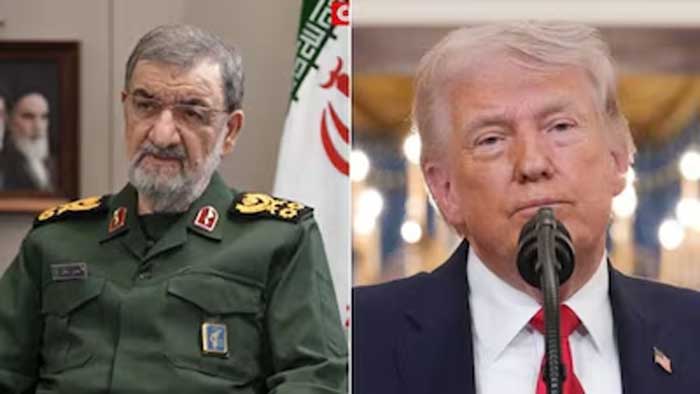
A potential peace agreement between the United States and Iran hinges on Washington releasing $24 billion in frozen Iranian assets, according to a senior Iranian official, who also cautioned that any renewed US military action would have serious consequences for the region.
Mohsen Rezaei, a military adviser to Supreme Leader Ayatollah Mojtaba Khamenei, said in an interview with CNN that the release of the funds would serve as a crucial test of trust between Tehran and the Trump administration.
“If Trump wants an agreement with Iran, the release of this $24 billion is a test of trust,” Rezaei said. “This is our own money, not America’s money.”
He argued that negotiations between the two sides have reached an impasse and that it is now up to Washington to move the process forward.
“The negotiations are at a deadlock. Trump must break this deadlock. The ball is in Trump’s court,” Rezaei said.
According to Rezaei, Iran has proposed that $12 billion of the frozen assets be released immediately after the signing of an interim agreement, with the remaining $12 billion to be freed at a later stage as part of a broader peace framework aimed at ending tensions in West Asia.
US officials, however, remain cautious about unfreezing Iranian funds, reportedly concerned that doing so could reduce Washington’s leverage in ongoing negotiations. President Donald Trump has repeatedly sought a deal that he considers stronger than the 2015 Iran nuclear agreement and has often criticised the Obama administration for providing financial relief to Tehran, famously describing it as handing over “pallets of cash.”
While there is no universally accepted figure for the total amount of Iranian assets frozen worldwide, media estimates have placed the amount between $100 billion and $120 billion.
Rezaei also issued a warning against any return to military confrontation, saying Iran would broaden the scope of conflict if the United States resumed attacks.
According to him, Tehran could extend military operations beyond the Persian Gulf to strategic waterways including the Strait of Hormuz, the Indian Ocean, the Bab al-Mandab Strait, the Red Sea and the Mediterranean Sea.
“We will give another dimension to the war by attacking other American bases beyond those targeted so far,” he said, while adding that he believes the likelihood of a new conflict remains low.
The Iranian official also ruled out the possibility of a meeting between Trump and Khamenei in the near future, saying negotiations are still at an early stage and accusing the US president of contributing to the current stalemate.
“This will not happen,” Rezaei said when asked about a potential meeting between the two leaders.
Trump had earlier expressed optimism about relations with Iran’s leadership, saying he and Khamenei “seem to be getting along well” and that he would be “honoured” to meet the Iranian leader.
Rezaei further reiterated Iran’s position on the Strait of Hormuz, one of the world’s most strategically important shipping routes through which a significant share of global oil and liquefied natural gas supplies transit.
He claimed that Iran and Oman jointly hold sovereignty over the waterway and would manage it together. While rejecting suggestions that Iran might impose transit tolls on ships, Rezaei said Tehran could seek maintenance fees, arguing that the costs of managing the strait should not fall solely on Iran.
A prominent figure in Iran’s security establishment, Rezaei served as commander of the Islamic Revolutionary Guard Corps (IRGC) from 1981 to 1997 after fighting in the Iran-Iraq War. He later joined the Expediency Council, an influential advisory body to the supreme leader, and served as vice president under former president Ebrahim Raisi. Despite contesting four presidential elections, Rezaei has never succeeded in securing Iran’s top elected office.
Comments are closed.