
Netanyahu Hails “Historic Victory” as Israel-Iran Ceasefire Takes Effect, but US Intel Questions Impact

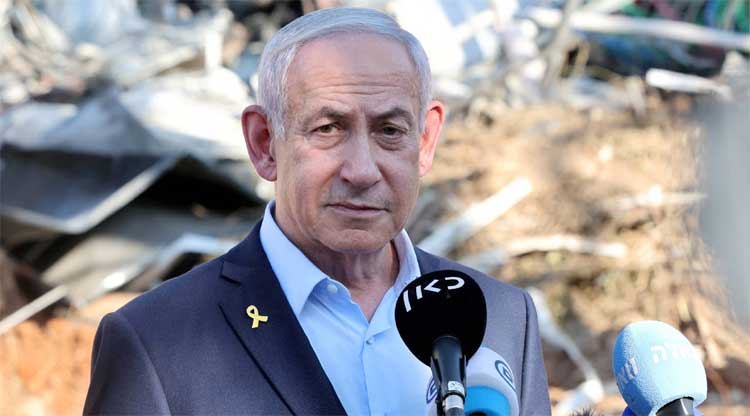
Israeli Prime Minister Benjamin Netanyahu has declared a “historic victory” over Iran following a 12-day conflict that culminated in a ceasefire agreement on Tuesday. Despite Netanyahu’s triumphal tone, a classified U.S. intelligence assessment has found that recent American strikes — including President Donald Trump’s deployment of bunker-busting bombs — set back Iran’s nuclear program by only a few months.
The strikes, launched over the weekend with U.S. support, targeted key Iranian nuclear facilities. President Trump claimed they had “destroyed” underground sites essential to Iran’s nuclear ambitions. However, sources familiar with a preliminary Defense Intelligence Agency report said the strikes only sealed entrances to some facilities and did not fully destroy uranium stockpiles or centrifuges.
White House Press Secretary Karoline Leavitt confirmed the authenticity of the leaked assessment but dismissed its conclusions as “flat-out wrong,” defending both Trump and the military operation as a “perfectly executed mission.”
In a national address following the ceasefire, Netanyahu insisted, “Iran will not have a nuclear weapon. We have thwarted Iran’s nuclear project.” He added that Israel would act with equal “determination and intensity” if Tehran attempted to rebuild.
Israel’s military, which began its bombing campaign on June 13, claimed the strikes had delayed Iran’s nuclear development “by years.” Iran, however, has repeatedly denied seeking a nuclear weapon, maintaining its nuclear program is solely for peaceful purposes.
The conflict — the most intense direct confrontation between Israel and Iran in decades — killed over 600 Iranian civilians and injured nearly 5,000, according to Iran’s health ministry. Israeli airstrikes hit nuclear and military sites, as well as residential areas, triggering waves of Iranian missile attacks in response. The escalation peaked with U.S. airstrikes, followed by an Iranian counterstrike on the largest U.S. military base in the Middle East, which President Trump dismissed as “weak,” thanking Iran for advance notice.
Tehran has since signaled a willingness to return to nuclear negotiations, with Iranian President Masoud Pezeshkian stating his government would uphold its “legitimate rights” to peaceful atomic energy.
The truce was announced after Trump berated both sides for early violations. Iran agreed to halt strikes if Israel did the same, while Israeli forces confirmed they had paused further attacks.
International reaction to the ceasefire was cautiously optimistic. Saudi Arabia and the European Union welcomed the development, while Russia urged that the truce be sustainable. French President Emmanuel Macron, however, warned the risk of Iran secretly enriching uranium had “increased.”
In Israel, some welcomed the pause in hostilities. “Everyone is tired. We just want some peace of mind — for us, for the Iranian people, for the Palestinians, for everyone in the region,” said a Tel Aviv resident.
Iranian civilians, however, expressed skepticism about the durability of the truce. “I really don’t know about the ceasefire,” said Amir, 28, who had fled Tehran during the strikes. “Honestly, I don’t think things will return to normal.”
Following the ceasefire, Israeli military chief Lt. Gen. Eyal Zamir said focus would shift back to Gaza. Israeli opposition parties, the Palestinian Authority, and groups representing families of hostages in Gaza have all called for a parallel truce there.
Comments are closed.