
‘No Gas, No Work’: How LPG Crisis Is Forcing Migrant Workers To Leave Cities, Head Back Home

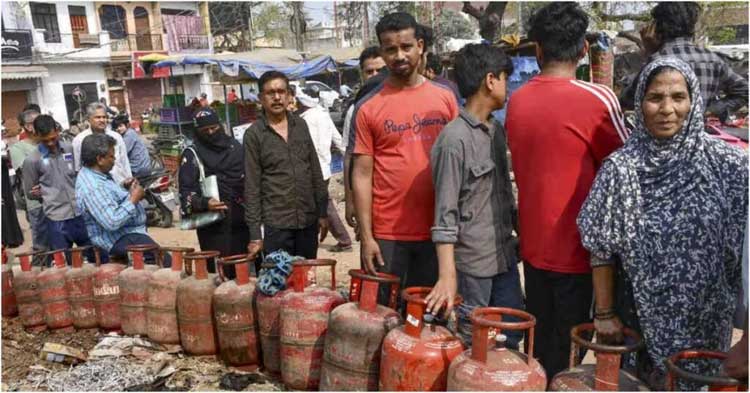
Five years after the COVID-19 pandemic forced millions of migrant workers to leave cities, a fresh crisis is triggering a similar exodus. This time, it is an acute LPG shortage—linked to the ongoing West Asia conflict—that is pushing workers out of major urban centres.
As cooking gas becomes scarce and prohibitively expensive, and jobs dependent on it begin to shrink, many migrant workers are once again returning to their villages, echoing the disruption seen during the pandemic.
LPG shortage hits migrant livelihoods
The crisis has hit workers from Bihar particularly hard. With restaurants cutting operations due to irregular gas supply, thousands employed in hotels and eateries are facing uncertainty.
At Danapur Railway Station in Patna, several workers said they had no choice but to leave as LPG cylinders were either unavailable or insufficient. Rising food prices have also made eating outside unaffordable.
“There is no gas, no work, and no way to cook. That is why we are going back to our village,” one worker said. Others echoed similar concerns, saying that even when work was available, survival without cooking gas had become impossible.
Impact spreads across cities
The effects of the shortage are being felt across multiple cities. Migrants, who rely on LPG both for cooking in shared accommodations and for jobs in small eateries and food stalls, are facing a dual crisis of livelihood and survival.
In Mumbai, a noticeable number of workers have started returning home. A survey of passengers on trains like the Kamayani Express, Lokmanya Tilak Terminus–Rajgir Express and Howrah Mail found that nearly half cited LPG shortage as the reason for leaving.
Workers reported being unable to secure gas cylinders and struggling with soaring food costs, forcing them to reconsider staying in cities.
Prices surge, black market thrives
Many workers said LPG prices have surged sharply. Small 5-kg cylinders that once cost around Rs 500–550 are now being sold for Rs 1,100 to Rs 2,000. Standard 14.2-kg cylinders, earlier priced between Rs 900 and Rs 1,200, are reportedly selling for as high as Rs 3,200 to Rs 4,000 in some areas.
Some claimed that LPG is being sold in the black market at nearly Rs 500 per kg, putting it out of reach for daily wage earners.
Labour exodus intensifies
The shortage has triggered a large outflow of labour in industrial hubs like Surat, where over 1.5 lakh workers are estimated to have left in the past month.
Workers said that even when employment opportunities existed, the lack of affordable cooking gas made it impossible to continue living in cities. Many reported resorting to firewood for cooking before deciding to leave.
Similar distress has been reported from Delhi, Uttarakhand and Punjab, where both workers and small business owners say rising costs and erratic supply are affecting their ability to function.
West Asia conflict disrupts supply
The LPG shortage has been linked to disruptions in global energy supply chains due to the ongoing conflict in West Asia. India imports nearly 60% of its LPG, much of it from the region.
Recent surveys suggest that over 40% of households faced delays in cylinder deliveries last week, indicating widespread supply strain.
The impact extends beyond households to businesses. The restaurant sector alone could face losses of up to Rs 79,000 crore as many outlets cut back operations or temporarily shut down.
Government response
The Ministry of Petroleum and Natural Gas has said it is taking steps to manage the situation and ensure steady supply. Authorities have urged citizens to avoid panic buying and rely on official channels for information.
The government has prioritised LPG supply for households, hospitals and essential services, while ramping up refinery production and promoting alternative fuels such as PNG, kerosene and electric cooking.
States have been directed to prevent hoarding and black marketing and ensure fair distribution. Officials maintain that supplies continue across the country, even as demand pressures and delivery delays persist.
A growing concern
What began as a supply issue is now evolving into a broader socio-economic challenge. For many migrant workers, the crisis is no longer just about cooking gas—it is about survival.
As rising costs, shrinking job opportunities and uncertain supply converge, thousands are once again being forced to leave cities in search of stability back home.
Comments are closed.