
No More Wake-Up Calls as Sloppy India Reach Point of No Return After Record Loss to South Africa

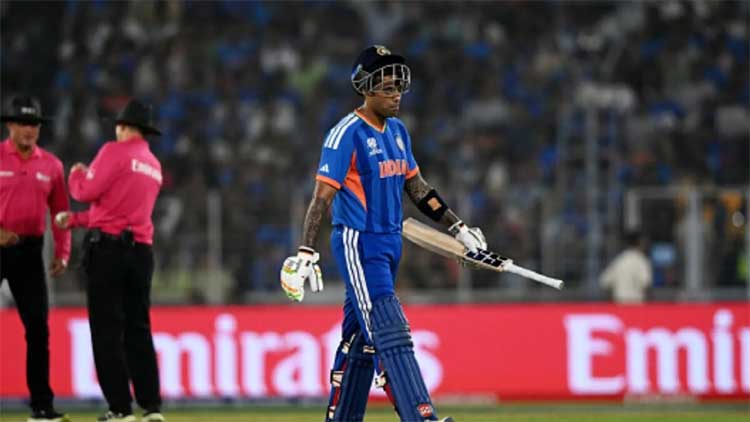
Those blessed with hindsight will claim they saw this coming. The warning signs, they will argue, were always there. But hindsight is an easy luxury — and best treated with caution.
What is undeniable, however, is that 13 proved deeply unlucky for India on Sunday night. Riding a remarkable 12-match winning streak across two T20 World Cups, India were emphatically brought back to earth by a relentless South Africa side that exposed vulnerabilities Zimbabwe and West Indies will have noted with interest.
The 76-run drubbing has left India languishing on net run-rate, effectively forcing them to abandon that equation altogether. The only realistic path forward now is simple: win. To stay alive in the tournament, India must quickly rediscover the ruthless efficiency that defined their cricket over the past 20 months.
There is no shortage of concerns. The problems begin at the top of the order and stretch uncomfortably deep into the batting lineup. A left-hand-heavy combination once viewed as a strategic advantage is increasingly resembling a liability. Equally troubling is the absence of meaningful opening partnerships — instability that has placed mounting pressure on Tilak Varma, particularly given his lack of recent matchplay.
Here are the challenges India must urgently confront.
Abhishek’s Crisis of Confidence
Three successive ducks would shake even the most seasoned cricketer. Abhishek Sharma, though ranked among the world’s best T20I batters, is still relatively new to the international stage. At 25, he has not endured a slump of this magnitude before.
There were fleeting signs of promise in Ahmedabad — a crisp boundary, a six — but his innings never found rhythm. At his best, Abhishek’s batting is marked by composure and balance. On Sunday, however, desperation crept in. Rash strokes and loss of shape betrayed a player grappling with confidence.
India’s leadership now faces a delicate decision: persist and hope for a turnaround, or intervene before the slide deepens further.
Persistent Opening Failures
Five matches have yielded four first-over wickets. The highest opening stand remains a modest 25. The pattern is unmistakable — early breakthroughs have become routine, not aberrations.
The left-left combination at the top, followed by another left-hander at No. 3, has struggled to provide stability. Sanju Samson’s right-handedness offers theoretical balance, but selection cannot hinge on batting orientation alone.
India must weigh whether structural change outweighs continuity. Early indications suggest a recall for Samson may be imminent.
Tilak Varma’s Uneasy Tournament
Few players have been more disrupted by circumstances than Tilak Varma. A series of health setbacks limited his preparation, and repeated early wickets have further complicated his role.
While his scores reflect starts rather than failures, they also reveal a batter unable to settle. Sluggish surfaces and constant scoreboard pressure have blunted his natural fluency.
A reshuffle — perhaps moving Tilak down the order while promoting Suryakumar — could offer breathing space without sacrificing talent.
The Axar Patel Dilemma
Axar Patel’s omission raised eyebrows. The team management’s logic — deploying Washington Sundar’s off-spin to counter South Africa’s left-handers — was defensible, but circumstances rendered the plan redundant.
With Bumrah and Arshdeep dismantling the top order early, Sundar’s intended matchup never materialised. Axar’s proven reliability and big-tournament pedigree make his absence feel curious in hindsight.
If tactical flexibility remains the objective, adjustments elsewhere in the XI may be necessary.
Net Run-Rate No Longer Relevant
The defeat’s statistical damage is severe. A net run-rate of -3.80 leaves India with little mathematical comfort. Yet obsessing over margins now would be counterproductive.
India’s mandate is straightforward: secure victories. Anything more complex risks distraction. Should South Africa maintain dominance, run-rate calculations may yet prove irrelevant.
India’s margin for error has vanished. Corrections must be swift, clarity must prevail, and confidence must be restored. Failure to respond decisively could see India exit their own tournament prematurely — an outcome that would inevitably intensify scrutiny on an already embattled leadership group.
That is hardly the scenario India would have wished to confront at dawn.
Comments are closed.