
North Korea Dismisses South Korea’s Peace Efforts as Worthless

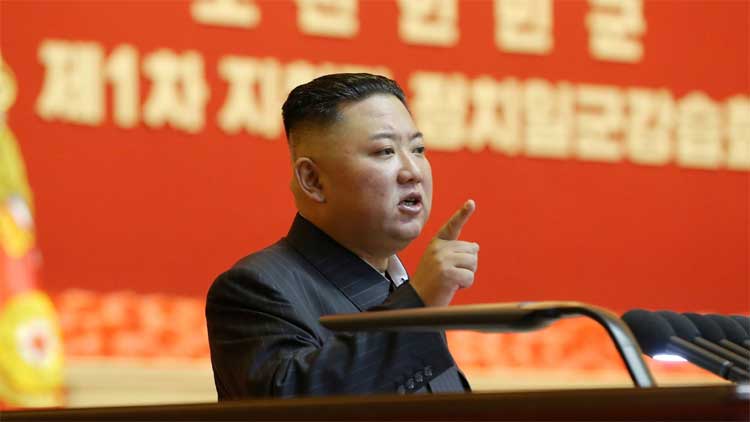
North Korea has firmly dismissed recent peace proposals from South Korean President Lee Jae Myung, with Kim Yo Jong — the influential sister of North Korean leader Kim Jong Un — declaring on Monday that Pyongyang has no interest in dialogue or reconciliation.
In her first public response to Lee’s outreach, Kim, a senior official in the North’s ruling Workers’ Party, criticized Lee’s continued support for the South Korea-US alliance, saying it proves he is no different from previous “hostile” administrations. “If South Korea expects to reverse all the consequences of its actions with a few sentimental words, there could be no greater miscalculation than that,” she said, according to North Korea’s state-run KCNA.
Lee, a liberal who assumed office on June 4 following the impeachment of conservative Yoon Suk Yeol, has pledged to restore inter-Korean ties. As a gesture of goodwill, his government halted border loudspeaker broadcasts and banned activists from sending anti-North leaflets across the border — moves that had long irked Pyongyang.
However, Kim Yo Jong dismissed these efforts as merely undoing provocations that should never have happened. “It’s not even something worth our assessment,” she said. “We again make clear… we are not interested, and we will not be sitting down with South Korea — there is nothing to discuss.”
Despite cautious optimism in Seoul — especially after North Korea also stopped its own loudspeaker operations — Pyongyang’s statement dims hopes of an early breakthrough.
President Lee, while pursuing diplomatic thaw with the North, has also reaffirmed that the US-South Korea alliance remains the cornerstone of his foreign policy. On Sunday, during a ceremony marking the anniversary of the Korean War armistice, he said, “Through efforts in the areas of politics, economic security, and culture, we will strengthen the South Korea-US alliance that was sealed in blood.”
North Korea also marked the occasion, which it calls Victory Day, with commemorative events, including a scaled-down military parade.
The Korean War ended in 1953 with an armistice, not a peace treaty — leaving the two Koreas technically still at war. The main parties — North and South Korea, the US, and China — have yet to reach a permanent resolution.
Comments are closed.