

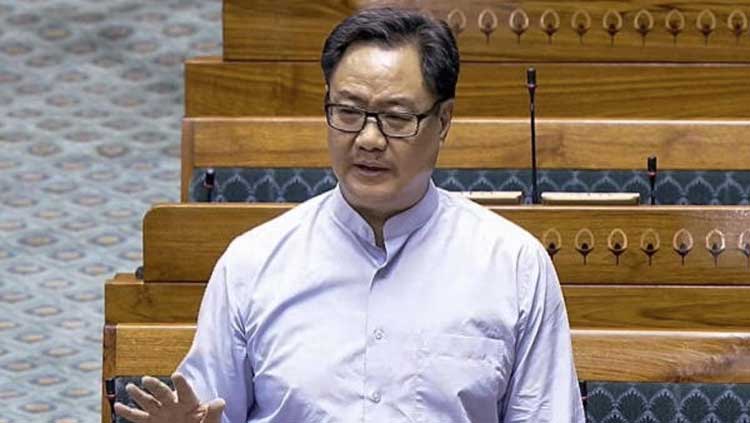
Union Parliamentary Affairs Minister Kiren Rijiju has said the proportional representation of states will remain unchanged even after the proposed expansion of the Lok Sabha to 850 seats and the rollout of women’s reservation, adding that the government will clarify this in Parliament.
Addressing Opposition concerns over the timing of the bills, Rijiju dismissed criticism that the move is linked to ongoing elections or the census, arguing that delaying the reforms would only lead to further political objections.
Why expand Lok Sabha seats?
Rijiju said the proposed 50% increase in seats is aimed at accommodating 33% reservation for women while also addressing the growing population burden on MPs. He noted that each MP in India currently represents around 25–27 lakh people, far higher than in countries like the UK.
He added that the last delimitation was based on the 1971 Census, when India’s population was under 60 crore, compared to over 140 crore today.
Census and delimitation concerns
On why the government is not waiting for the next census, Rijiju said delays—especially due to the complexity of a caste-based enumeration—would make it impossible to implement women’s reservation by the 2029 general elections.
He emphasised that the delimitation exercise will follow a framework set by Parliament, ensuring that each state’s share of seats remains proportional to its current representation.
Southern states’ share to remain intact
Responding to concerns that southern states could lose representation, Rijiju said their proportional share would remain unchanged. He cited projected increases in seats—such as Karnataka rising from 28 to 42 and Tamil Nadu from 39 to 59—to argue that no state would be penalised.
He rejected claims by Opposition leaders like P. Chidambaram that the southern states’ share would decline, calling such assertions misleading.
Political divide persists
While the Opposition has backed women’s reservation, it has raised concerns over delimitation and the absence of provisions like OBC quotas. Rijiju dismissed these objections, saying OBC reservation is not part of the current constitutional framework.
On whether the bills would pass without Opposition support, Rijiju said opposing them would carry political costs, framing the legislation as a “national commitment” rather than a political issue.
Comments are closed.