
Taiwan’s Space Chief Warns Clock Ticking on Satellite Network Plans

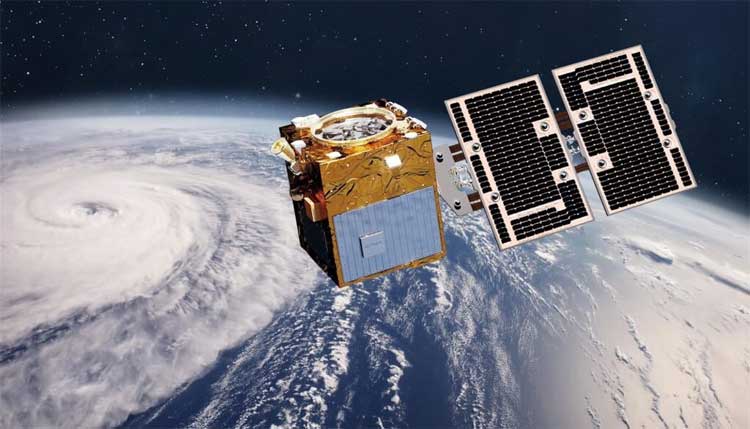
Taiwan must quickly develop its own satellite communications to ensure Internet and phone services in the event of conflict with China, the island’s space chief has warned.
“The clock is ticking,” said Wu Jong-shinn, director general of the Taiwan Space Agency, in an interview with AFP. “We need to speed up.”
Wu said Taiwan would need around 150 low Earth orbit (LEO) satellites for “basic communication resilience” if Beijing were to cut the undersea cables that connect the island to the world. Taiwan currently has none.
The urgency was underscored in 2023 when two telecom cables to the outlying Matsu islands were severed, disrupting communications for weeks.
Taiwan’s Plans and Partnerships
Taiwan plans to launch the first of six LEO satellites in 2027 under its Beyond 5G program. U.S. officials have previously flagged 2027 as a possible timeline for a Chinese invasion.
In the meantime, Taiwan is relying on commercial partners. Its state-owned Chunghwa Telecom has signed a multimillion-dollar deal with European operator Eutelsat, which runs more than 600 satellites after merging with Britain’s OneWeb. It has also partnered with U.S.-based Astranis, Luxembourg’s SES, and is in talks with Amazon’s Kuiper and Canada’s Telesat.
Starlink dominates the sector with about 8,000 satellites, but Elon Musk’s ties to China and past comments suggesting Taiwan should become part of China have fueled distrust in Taipei.
Eutelsat’s system was already tested in Taiwan after a 7.4-magnitude earthquake in 2024 knocked out communications.
Falling Behind
Taiwan lags far behind the U.S. and China, both of which have invested heavily in manned spaceflight and vast satellite networks. Taipei currently has just eight satellites in orbit, mostly for weather and remote sensing, and hopes to have over 20 by 2031. A second optical sensing satellite is due to launch in November aboard a SpaceX rocket.
Wu said Taiwan aims to develop its own rockets and launch site within the next decade.
Balancing Security and Cost
Experts warn that building a national constellation will be costly and technically demanding. “You need a large number of satellites in low Earth orbit for continuous coverage,” said Brad Tucker, an astrophysicist at the Australian National University. “You also need to maintain and replace them, which is why Starlink works.”
But relying solely on foreign providers carries risks, analysts say. Cathy Fang, a Taiwanese policy expert, cited Ukraine’s experience, where Musk admitted limiting Starlink use to block a planned attack on Russian warships.
“It would be dangerous for Taiwan to rely only on outside operators during a war,” Fang said. “We need to cultivate our own industry. We can’t just rely on one side.”
Comments are closed.