
Trump administration says many foreign nationals seeking green cards may have to apply from home countries

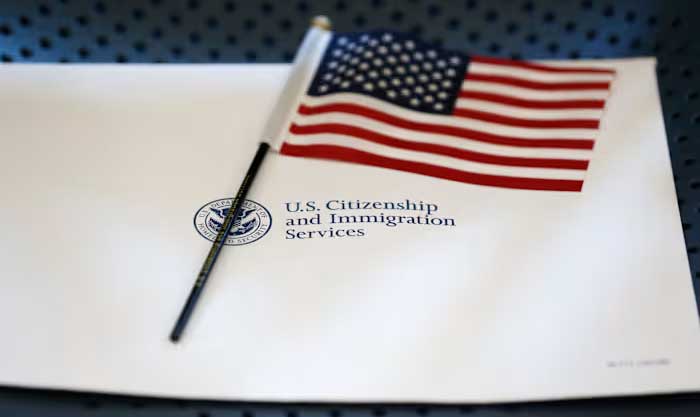
Foreign nationals in the United States seeking permanent residency would be required to leave the country and apply from their home nations under a newly announced Trump administration policy shift, a move that has sparked concern among immigration lawyers, aid organizations, and immigrant communities.
For more than 50 years, many foreign nationals legally present in the US — including spouses of US citizens, work and student visa holders, refugees, and asylum seekers — have been able to apply for permanent residency through an in-country “adjustment of status” process.
The announcement by U.S. Citizenship and Immigration Services (USCIS) says temporary visa holders seeking lawful permanent resident status, commonly known as a green card, would generally need to return to their home countries to apply, unless they qualify for “extraordinary circumstances” determined by agency officers.
“Nonimmigrants, like students, temporary workers, or people on tourist visas, come to the US for a short time and for a specific purpose,” USCIS said, arguing that temporary stays should not become the starting point for the green card process.
The move marks another step in the administration’s broader effort to tighten legal immigration pathways, affecting both foreigners already in the US and prospective migrants abroad.
Former USCIS senior adviser Doug Rand said roughly 600,000 people already living in the US apply for green cards annually and argued that the policy aims to narrow access to permanent residency, which serves as a route to citizenship.
USCIS has not clarified when the policy will take effect, whether applicants must remain abroad during the entire process, or whether pending green card cases would be affected. The agency later indicated that applicants who provide an “economic benefit” or serve a “national interest” may still be allowed to remain in the US while their applications are processed.
Immigration groups warned the change could create serious complications, particularly for applicants from countries facing visa restrictions or with limited US diplomatic presence. Humanitarian organization World Relief cautioned that some families could face prolonged or indefinite separation if immigrant visas are unavailable in their home countries.
Lawyers also disputed USCIS’s characterization of the policy as merely restoring the law’s “original intent,” saying decades of established practice allowed many immigrants to adjust their status without leaving the US.
American Immigration Lawyers Association official Shev Dalal-Dheini said the guidance could potentially affect a broad range of applicants, including spouses of US citizens, humanitarian beneficiaries, skilled workers, doctors, students, and religious visa holders.
Legal experts say uncertainty remains high, with attorneys and immigrant support groups still examining how broadly the new rules might be implemented and who would ultimately be affected.
Comments are closed.