
Trump’s South Korea snub in favor of North Korea fuels broader US security concerns

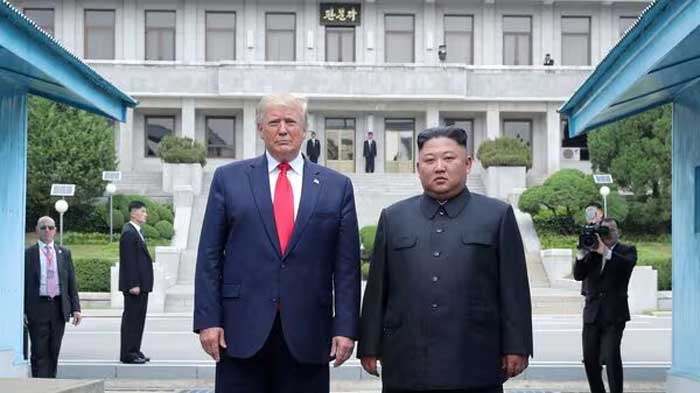
President Donald Trump’s decision to scale back joint military exercises with South Korea has raised concerns over Washington’s commitment to a key Asian ally and the broader security architecture in the Indo-Pacific.
Trump linked the move to South Korea’s refusal to join the US war against Iran and highlighted his relationship with North Korean leader Kim Jong Un. Critics say the decision reflects the transactional and highly personal approach that has increasingly shaped Trump’s foreign policy.
Dan Fried, a former assistant secretary of state, said the move could weaken South Korea and Japan, unsettle Taiwan and NATO allies, and embolden China and North Korea.
Danny Russel, a former US assistant secretary of state for East Asian and Pacific affairs, called the decision “tragically upside-down,” arguing that Washington was punishing an ally while accommodating an adversary.
Concerns in South Korea
Trump on Sunday ordered the US military to reduce the scale of the 11-day Ulchi Freedom Shield exercises, which began as scheduled on Monday. It remained unclear which elements of the drills would be affected.
The announcement surprised many in South Korea, where the US alliance is considered central to national security amid the threat from nuclear-armed North Korea.
Democratic lawmakers in Washington also criticised the decision. Rep. Greg Meeks said treating a close US ally like an adversary could weaken American alliances while benefiting China and North Korea.
Trump later posted a photo of Kim Jong Un on social media with the caption: “HEY DONALD … WE COOL, RIGHT?”
Former US Ambassador Robert Wood said the military exercises are essential for deterring North Korea, which has continued developing its weapons capabilities while rejecting US efforts to revive nuclear negotiations.
Matthew Kroenig of the Atlantic Council warned that reducing the drills could also weaken Washington’s efforts to reassure South Koreans that the US remains committed to their defence. Public support in South Korea for developing an independent nuclear arsenal has been growing, he said.
Seoul had sought closer ties with Trump
Trump’s decision came despite efforts by South Korean President Lee Jae Myung to cultivate a strong relationship with the US president.
During a meeting at the White House last year, Lee praised the Oval Office’s elaborate décor, echoed Trump’s claim that Kim Jong Un might not have pursued his nuclear ambitions had Trump won the 2020 election, and even raised the possibility of a future Trump Tower in North Korea.
Charles Kupchan of the Council on Foreign Relations said the latest move could encourage US allies to think more seriously about whether they can depend on Washington for their long-term security.
He said South Korea and European allies may increasingly have to consider the possibility that the US security umbrella could become less reliable.
Fears over the alliance system
Kupchan acknowledged that Trump’s demand for allies to contribute more to their own defence is not inherently unreasonable. However, he argued that the president’s unpredictable approach risks damaging the solidarity that has sustained US alliances for decades.
Fried said Trump appeared unwilling to recognise the gains achieved after pressuring NATO members and Asian allies to increase defence spending.
“NATO is building up, South Korea is building up, Japan is building up,” Fried said, arguing that Trump appeared determined to undermine the alliances rather than claim credit for those gains.
John Herbst, a former US ambassador to Ukraine, said the Korea decision highlighted the inconsistency of Trump administration policy. However, he noted that the US still maintains its forward military bases and core alliances.
Herbst warned that if such moves become more frequent and significant, they could eventually begin dismantling the alliance system that has underpinned US security policy since World War II.
For now, however, Kupchan said the core US-South Korea relationship remains intact despite Trump’s rhetoric.
Whether the latest announcement represents a lasting policy shift or another temporary move remains unclear. Kroenig noted that Trump’s unpredictability makes it possible that the exercises could ultimately proceed largely as planned and the issue could soon fade from public discussion.
Comments are closed.