
UN Opens New Session as Leaders Warn Reform Is Crucial to Prevent Erosion

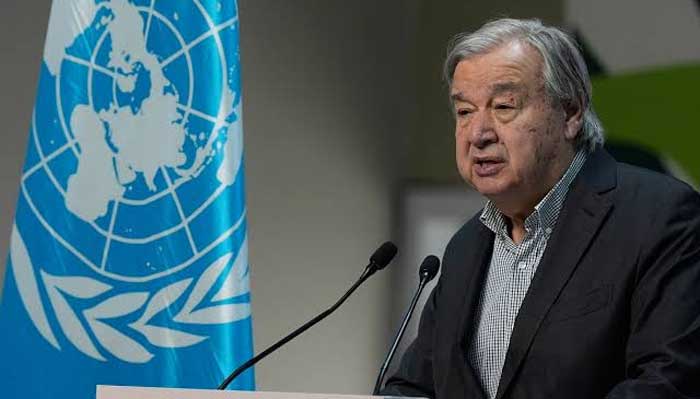
The United Nations on Tuesday concluded its 80th General Assembly session and opened the 81st in a single day of ceremonies, with outgoing and incoming leaders warning that the world body must reform or risk losing global confidence.
UN Secretary-General Antonio Guterres, delivering what he described as his final address to the General Assembly as UN chief, offered a grim assessment of the global situation, citing wars with the potential for nuclear escalation, worsening climate crises, rapid advances in artificial intelligence without adequate oversight, and growing humanitarian suffering amid deep cuts in aid funding.
“Geopolitical mistrust and suspicion continue to block the effective solutions we need — and erode people’s faith in the possibilities of global cooperation,” Guterres said.
Despite the challenges, Guterres said he remained “enormously hopeful,” highlighting the UN’s Pact for the Future and the UN80 Initiative as frameworks for bold reforms and practical action.
Launched by Guterres in March 2025 to mark the UN’s 80th anniversary, the UN80 Initiative seeks to streamline the organisation by addressing overlapping structures, outdated mandates and bureaucratic inefficiencies.
Outgoing General Assembly President Annalena Baerbock said reform remained unfinished business that she was leaving to her successor, Khalilur Rahman. She described the 80th session as a “crossroads” for the organisation, particularly over concerns that a small number of states could effectively block consensus.
Baerbock said member states responded by pushing ahead with 317 resolutions and 116 plenary meetings while also opening a new chapter on AI governance, despite divisions and the limited number of issues resolved through consensus.
“Not a single day, not a single country would be better off without the United Nations,” Baerbock said, rejecting claims that the organisation had become irrelevant.
She credited Guterres with placing reform at the centre of the UN agenda through the UN80 Initiative, including efforts to reduce mandates and merge institutions such as the UN System Staff College and the UN Institute for Training and Research.
“If we are not capable of freeing this organization from overlapping structures and mandates, as well as a heavy bureaucratic mentality, it will erode over time,” she warned.
Baerbock also described the selection of the next secretary-general as a major test of the UN’s credibility, formally handing responsibility for the process to Rahman.
Rahman, from Bangladesh, was then sworn in as the new General Assembly president. He pledged to lead an open and media-engaged presidency under the theme “Restoring Trust, Managing Transformation.”
In his inaugural address, Rahman acknowledged that the UN “has often fallen short of the expectations placed upon us,” pointing to a widening trust deficit among member states.
“Trust cannot simply be requested, it must be earned,” he said.
Rahman outlined six priorities for his 12-month presidency: conflict prevention and peacekeeping; accelerating progress toward the Sustainable Development Goals; climate adaptation; advancing human rights; inclusive global governance of artificial intelligence; and addressing the UN’s financial challenges.
He noted that only 36% of Sustainable Development Goal targets are currently on track, with just four years remaining to meet the 2030 deadline. His climate agenda will include preparations for COP31 in November and a high-level meeting on rising sea levels later this month.
On human rights, Rahman highlighted the anniversaries of the Durban Declaration against racism and discrimination and the Declaration on the Right to Development. He also pointed to Bangladesh’s hosting of more than one million displaced Rohingya as a particularly personal issue.
Rahman urged member states to pay their assessed contributions “in full, on time and without conditions” as the UN faces mounting financial pressures.
He will also oversee the process to select the next secretary-general under Article 97 of the UN Charter. Guterres’ second term ends on December 31. Rahman promised that the selection process would be conducted “fairly, inclusively and transparently” in coordination with the Security Council.
Emphasising his commitment to inclusivity, Rahman said his office was designed around the Charter’s opening words — “We the peoples” rather than “We the states” — and noted that women comprise 60% of his cabinet.
The day ended with a solemn wreath-laying ceremony honouring Dag Hammarskjold, the UN’s second secretary-general, who was killed along with 15 others in a plane crash in what is now Zambia on September 18, 1961.
Guterres renewed calls for the release of previously undisclosed records concerning the crash, citing a new report by investigator Mohammed Chande Othman. He said he would soon submit recommendations to the General Assembly.
Guterres also paid tribute to UN personnel killed while serving the organisation, saying they had died “in record numbers” over the past three years.
“Their sacrifice reminds us of all the women and men who have lost their lives while serving the United Nations,” he said.
Comments are closed.