
UN to vote Tuesday on watered-down Hormuz resolution

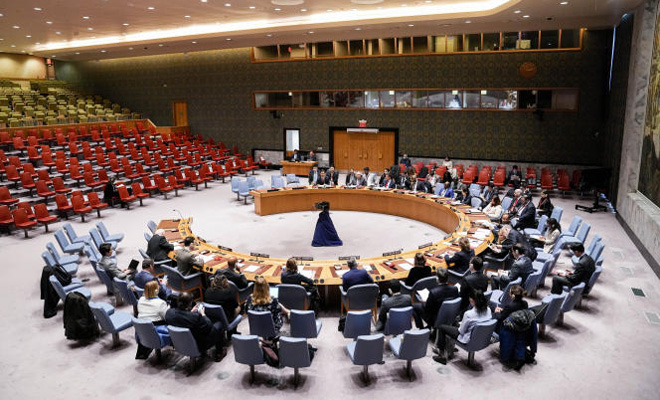
The revised text instead “strongly encourages” states with an interest in commercial maritime routes through the Strait of Hormuz to coordinate defensive efforts suited to the situation, aimed at ensuring the safety and security of navigation.
It notes such contributions could include escorting merchant and commercial vessels, while also endorsing measures to deter any attempts to close, obstruct, or interfere with international navigation through the Strait.
Diplomats said the watered-down version stood a better chance of passing, though its fate remained uncertain. Adoption would require at least nine votes in favour and no vetoes from the five permanent members — Britain, China, France, Russia and the United States.
Bahrain, backed by other Gulf Arab states and Washington, had circulated an earlier draft last Thursday that would have authorised “all defensive means necessary” to protect commercial shipping. However, votes on that proposal were postponed on Friday and Saturday. The draft had already been softened, with Bahrain dropping explicit references to binding enforcement.
China opposed the earlier language authorising force, warning it would “legitimise the unlawful and indiscriminate use of force” and risk further escalation with serious consequences.
Iran said on Monday it sought a lasting end to the conflict and resisted pressure to reopen the Strait. Meanwhile, US President Donald Trump warned Tehran could be “taken out” if it failed to meet his Tuesday night deadline for a deal.
Chinese Foreign Minister Wang Yi, after speaking with his Russian counterpart on Sunday, said Beijing was ready to work with Moscow at the Security Council to help ease tensions in the Middle East. He added that the fundamental solution to the Strait issue was to secure a ceasefire as soon as possible.
China, notably, is the world’s largest buyer of oil transported through the Strait.
Comments are closed.