
UNHCR Sounds Alarm Over Worsening Crisis as 1.6 Million Afghans Forced to Return from Iran, Pakistan

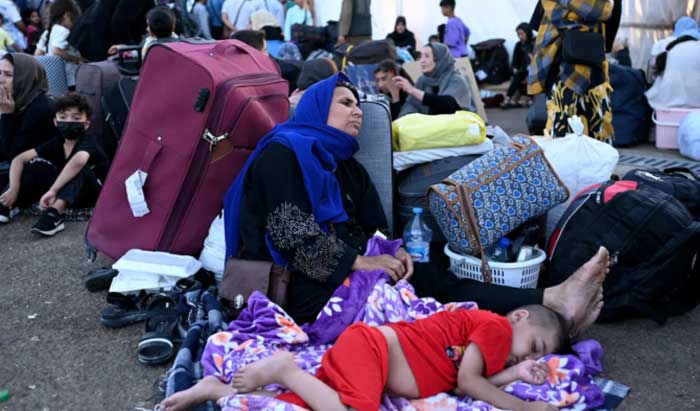
The United Nations Refugee Agency (UNHCR) has sounded the alarm over a deepening humanitarian crisis in Afghanistan, where more than 1.6 million Afghans have returned from Iran and Pakistan so far this year — many under coercive or involuntary conditions.
Speaking on Friday, UNHCR’s representative in Afghanistan, Arafat Jamal, described the mass returns as “evolving and chaotic,” adding that the scale of movement is overwhelming an already fragile country struggling with extreme poverty, drought, and insecurity.
“We are calling for restraint, for resources, for dialogue and international cooperation,” Jamal said, emphasizing that how these returns are managed will determine whether they contribute to stability or spark further unrest. “Handled with calm, foresight and compassion, returns can be a force for stability. Handled haphazardly, they will lead to instability, unrest and onward movements.”
The surge is particularly severe at the Islam Qala border crossing with Iran, where arrivals peaked at 50,000 people in a single day on July 4. UNHCR reports that over 1.3 million have come from Iran alone since January, many of whom were born abroad and are returning to an unfamiliar homeland in crisis. Iran has indicated plans to expel as many as 4 million Afghans, potentially pushing the total number of returnees this year to 3 million.
Jamal painted a grim picture of the conditions faced by returnees: exhausted, disoriented, and arriving with few resources or support. Women and girls are especially vulnerable, entering a society where their rights remain severely restricted.
Afghanistan, already reeling from multiple emergencies, is ill-prepared to handle the influx. Jamal cited UN data showing that 70% of Afghans live at subsistence levels, and a worsening drought threatens food security. Despite these needs, UNHCR’s Afghan response remains drastically underfunded — just 28% financed so far in 2025.
Aid workers are being forced to make painful choices. “Should we give one blanket instead of four to a family? One meal instead of three?” Jamal asked, describing agonizing field-level decisions due to lack of resources.
Still, UNHCR and partners like UNICEF are working to deliver emergency food, water, shelter, and support for unaccompanied children — nearly 400 of whom were deported from Iran in the span of two weeks. Efforts to assist women continue, with the agency investing in women-only markets, midwife training, and support for women entrepreneurs despite the Taliban’s restrictive policies.
Jamal confirmed that, thus far, the Taliban have cooperated at border crossings and allowed humanitarian operations to continue, though challenges remain.
Calling for a coordinated regional approach, UNHCR appealed for urgent donor support and highlighted regional efforts such as Uzbekistan’s trade engagement with Afghanistan as examples of constructive cooperation.
He also welcomed a recent UN General Assembly resolution backing voluntary, safe, and dignified returns and greater international cooperation.
“Billions have been wasted on war,” Jamal said. “Now is the time to invest in peace.”
Comments are closed.