
Vaibhav Sooryavanshi and Lamine Yamal Prove Age Is No Barrier When Pressure Arrives

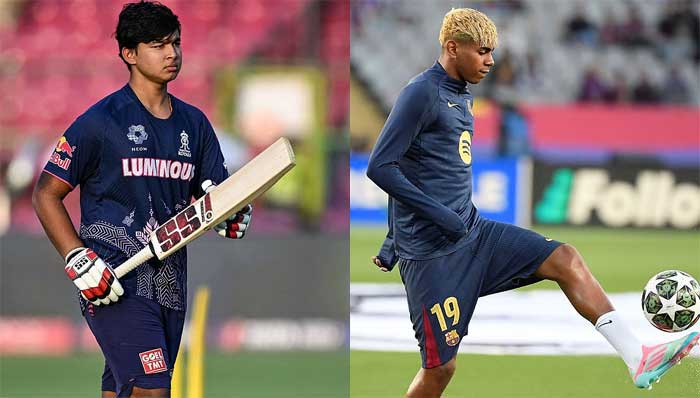
Spain did not enter their Saudi Arabia clash in panic, but there was certainly pressure surrounding them. A goalless draw against Cape Verde had left their World Cup campaign needing a response. For a team built on controlling possession, dictating tempo and turning dominance into goals, the opening result raised a key question — could Spain rediscover their attacking spark when the tournament demanded it?
That made Lamine Yamal’s first World Cup start significant. It was not just about introducing a teenage sensation. It was Spain placing faith in their youngest attacking talent to bring back speed, creativity and unpredictability.
Yamal answered almost immediately. His early goal against Saudi Arabia was more than an opening strike; it changed the entire atmosphere of the match. Spain, freed from the tension of another slow start, began playing with confidence. Saudi Arabia, who may have hoped to frustrate Spain and drag the contest into a difficult battle, suddenly had to chase the game.
By the time Spain established control and moved into a commanding first-half position, Yamal had already changed the rhythm. He was not the only reason behind Spain’s 4-0 victory — Mikel Oyarzabal’s finishing mattered, and Spain’s midfield control was decisive — but Yamal provided the spark that allowed the team to play with freedom.
A similar story unfolded in cricket with India’s teenage sensation Vaibhav Sooryavanshi.
In the final against Sri Lanka A, the stage was much bigger than a routine match. Finals often test young players because the pressure is different. Talent alone is not enough; temperament decides who rises.
Vaibhav responded by producing a breathtaking innings. His 94 off just 29 balls, including an 11-ball fifty, was extraordinary. But the importance of the innings went beyond the numbers. He did not simply score quickly — he took control of the occasion.
Instead of allowing the pressure of a final to slow him down, Vaibhav made the match revolve around him. Sri Lanka A never had the chance to settle because he attacked from the beginning and transformed the contest into a one-sided affair.
The rare quality: making pressure disappear
The comparison between Vaibhav and Yamal is not about saying the two sports are identical. Football and cricket require different skills. Yamal influences games through movement, creativity and decision-making. Vaibhav changes games through timing, aggression and fearless stroke play.
But the deeper similarity is their mindset.
Both teenagers entered high-pressure situations and changed the emotional direction of the contest before the pressure could overwhelm their teams.
Many young players struggle when the spotlight becomes brighter. They become cautious, aware of the moment and afraid of mistakes. Vaibhav and Yamal did the opposite.
Vaibhav turned a final into his personal stage. Yamal turned Spain’s uncertainty into confidence.
Their biggest quality is not only talent. It is their ability to shape important matches.
A promising young player shows flashes. A special young player changes the game when it matters.
Vaibhav showed Indian cricket that his ability is not limited to age-group dominance or future potential. He has already demonstrated the hunger to influence major occasions. Yamal reminded Spain that their attack becomes more dangerous when he is involved.
Sport often celebrates teenage prodigies, but pressure reveals whether they are truly ready. Attention can arrive before maturity, and expectations can become a burden.
Vaibhav Sooryavanshi and Lamine Yamal showed the opposite. They did not look like teenagers trying to survive the moment. They looked like players capable of owning it.
One destroyed a bowling attack. The other unlocked Spain’s attack.
The real sign of greatness is not just performing when everything is comfortable. It is changing the atmosphere when the match needs someone to step forward.
That is what both teenagers did — they did not just handle pressure; they made it look ordinary.
Comments are closed.