
Why Japan’s Sanae Takaichi is putting chips, trade and supply chains ahead of defence in India

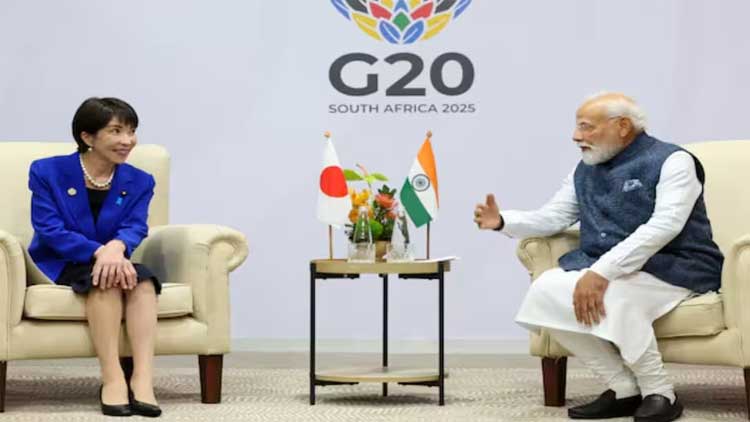
India and Japan are set to strengthen cooperation in economic security, semiconductor manufacturing and resilient supply chains during Japanese Prime Minister Sanae Takaichi’s three-day visit to India, with the emphasis remaining on expanding strategic economic ties rather than defence cooperation.
Prime Minister Narendra Modi and Takaichi are expected to discuss ways to significantly boost Japanese investment in India and increase bilateral trade beyond its current level of around $27.5 billion. Japan has committed to investing $61 billion in India over the next decade, with both sides seeking to accelerate collaboration in high-technology sectors.
Japan remains one of India’s largest infrastructure investors, backing flagship projects such as the Mumbai-Ahmedabad high-speed rail corridor. Discussions are also expected to cover future high-speed rail connectivity, including the proposed Delhi-Varanasi-Kolkata bullet train project.
Economic security takes centre stage
A key focus of the summit will be cooperation in semiconductor manufacturing, trusted supply chains and emerging technologies as both countries seek to reduce dependence on concentrated global production networks.
Tokyo is also expected to explore opportunities to support India’s plans to develop a trans-shipment hub under the Greater Nicobar Project, seen as strategically important for strengthening connectivity and logistics across the Indo-Pacific.
Regional security on the agenda
The two leaders are also expected to exchange views on regional and global security developments, including the situation in West Asia, where tensions involving Iran and the Strait of Hormuz continue to affect global energy security.
Developments in the South China Sea and the broader Indo-Pacific, particularly China’s expanding naval presence, are also likely to feature in the discussions.
Defence cooperation to continue
Although defence is not expected to dominate the agenda, India and Japan are likely to advance military cooperation through an agreement for the Indian Navy to procure the Unified Complex Radio Antenna (UNICORN) system in collaboration with Bharat Electronics Limited (BEL), aimed at enhancing the stealth capabilities of Indian warships.
Shared strategic outlook
Takaichi, widely regarded as a conservative leader with a strong focus on national security, has advocated strengthening Japan’s defence posture, including revisiting the country’s pacifist constitutional provisions and expanding its missile capabilities.
Officials expect the summit to elevate the India-Japan Special Strategic and Global Partnership through new initiatives in advanced technology, economic resilience and regional security cooperation while reinforcing their shared vision for a free, open and stable Indo-Pacific.
Comments are closed.