
With Covid-19 cases rising again in India, what precautions are states taking?

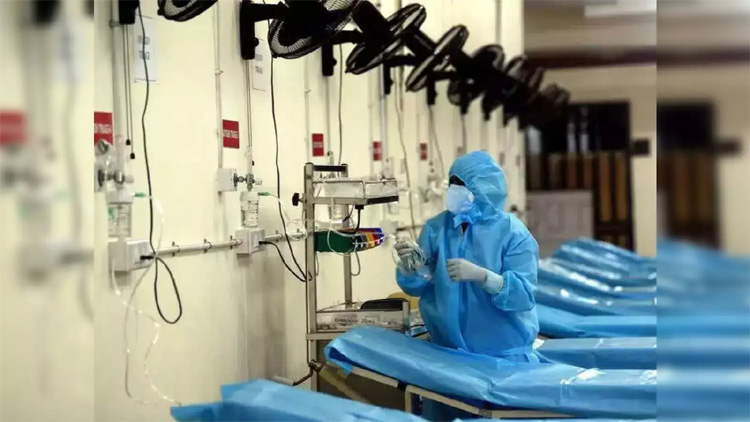
In light of the recent rise in Covid-19 cases across India, with 3,395 active cases currently, several states have begun implementing precautionary measures and issuing guidelines to help prevent the spread of new Omicron subvariants. These variants were identified through genome sequencing conducted primarily in the western and southern parts of the country.
Rajiv Behl, Director General of the Indian Council of Medical Research (ICMR), told PTI that the increase in infections is being driven by subvariants of Omicron that are less severe.
Behl said, “Four subvariants of Omicron — LF.7, XFG, JN.1, and NB.1.8.1 — have been found. The first three have been found in more cases.” He further added, “We have been closely monitoring the situation. At this moment, overall, we should monitor, be vigilant but there is no cause to worry.”
Meanwhile, on Friday, Union minister of state for health and AYUSH (Independent Charge) Prataprao Jadhav assured the public that the central government is fully prepared to manage any potential situation.
He told ANI, “Both our Central Health Department and the AYUSH Ministry are fully alert and closely monitoring the situation across all states. We have spoken with the respective Health and AYUSH Secretaries, as well as other concerned ministers.”
Jadhav also highlighted that the infrastructure developed during the previous Covid-19 waves has been reassessed, and preparations are already in motion.
“We’ve reviewed the infrastructure built during the earlier Covid waves, such as oxygen plants and ICU beds, and have already begun preparations. Our health systems are well-equipped and ready to handle any situation that may arise in response to Covid,” he said.
What precautions are states taking?
Karnataka
In response to the growing number of Covid-19 cases in Karnataka, the department of health and family welfare services on Saturday appealed to the public to remain calm, alert, and cooperate with health authorities to curb the spread and maintain safety.
An advisory was sent to Health Care Workers (HCWs) in both Covid and non-Covid healthcare areas across the state. The health department emphasised that Karnataka is actively tracking and managing the situation by focusing on prevention, early detection, and patient care. As Covid trends can shift, continued vigilance and adherence to guidelines remain essential.
The advisory listed key instructions for healthcare staff: regularly screen and report cases of Influenza-Like Illness (ILI), Severe Acute Respiratory Infections (SARI), and cases with co-morbidities through the P-Form on the IDSP-IHIP platform.
It also instructed that all SARI cases and 5% of ILI cases be referred for RT-PCR testing at designated facilities, with same-day sample shipping. Testing is mandatory for high-risk groups — children, the elderly, and pregnant women — if symptoms are present.
The department stressed the importance of timely uploading of test data on the IHIP portal and monitoring positivity rates and CT values. Covid-positive SARI samples should be sent to designated regional VRDLs for Whole Genome Sequencing in line with INSACOG guidelines.
It also highlighted the importance of coordinating with authorities for sewage surveillance and maintaining everyday life while adhering to health advisories.
“Call toll-free helpline number 1800 425 8330 for health advice, and 108 for emergency patient transport. Together, we can quickly identify and control potential illnesses, keeping ourselves and our people safe,” the advisory said.
Delhi
On May 23, the Delhi government issued an advisory asking hospitals to ensure they are ready with sufficient beds, oxygen, medications, and vaccines to deal with rising Covid cases.
Chief minister Rekha Gupta reassured the public on Thursday, saying, “19 Covid patients are hospitalised in Delhi, but there is no need to worry. The Delhi government is alert and hospitals are prepared to deal with any eventuality,” she said.
The advisory instructed that all medical equipment — including ventilators, Bi-PAP machines, oxygen concentrators, and PSA units — must be in working condition.
“All equipment such as ventilators, Bi-PAP, oxygen concentrators and PSA (Prostate-Specific Antigen) must be in functional condition,” it added.
Odisha
In Odisha, Health Secretary Aswathy S addressed the public on Saturday, asking them not to panic and confirming that all Covid patients in the state are stable.
“The latest ICMR report says that the present variant does not exhibit severe symptoms, and most cases are mild. Also, the Centre has not issued any guidelines, but advised all to remain vigilant in the wake of the changing weather,” she said.
She also assured that the state government is taking all necessary steps to handle the situation.
Public health director Nilakantha Mishra said authorities are closely watching the case trends to stop further transmission. He encouraged people to get tested if they have symptoms and isolate as needed.
Arunachal Pradesh
In Arunachal Pradesh, state surveillance officer Lobsang Jampa urged residents to remain calm, saying the detected strain appears milder than past variants.
“The health department is closely monitoring the situation and taking all necessary precautions to prevent the spread of the virus. We are also tracing all possible contacts the two women may have had,” he added.
He mentioned that a comprehensive health advisory will be released soon in coordination with the National Centre for Disease Control (NCDC) in Delhi.
“A comprehensive public health advisory will be issued soon after consultation with the National Centre for Disease Control (NCDC) in Delhi,” he said.
Comments are closed.