

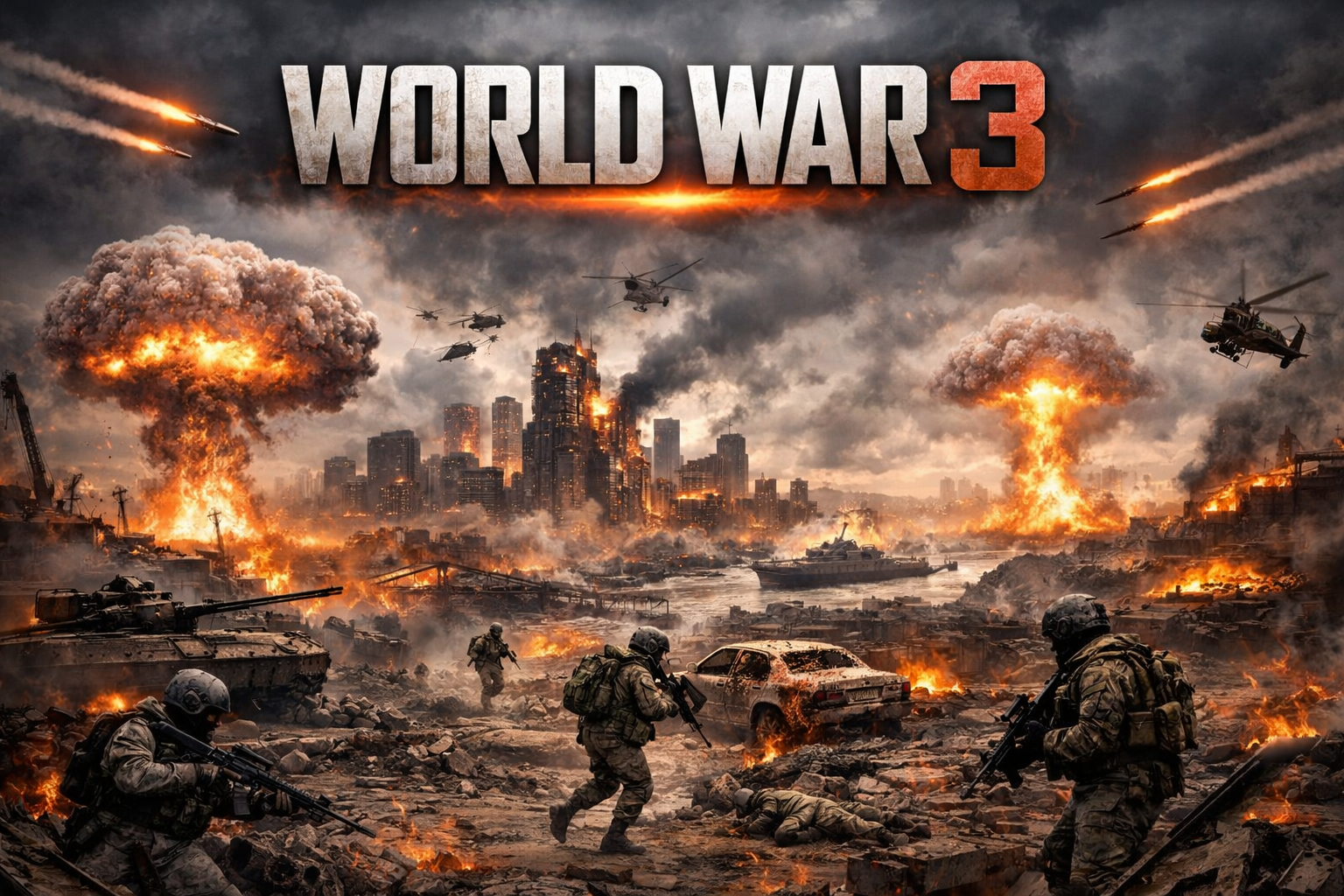
The question is being asked more frequently, and with greater urgency: Is the world drifting toward another global war?
In an era defined by uncertainty, the concern is understandable. From the fragile stability of the Middle East to the prolonged violence of the Russia–Ukraine War, and the growing strategic tension around Taiwan, the geopolitical climate feels increasingly combustible.
Yet, it is important to resist alarmism. The world today, for all its tensions, is not the world of 1914 or 1939.
The defining difference lies in the presence of nuclear weapons. The major powers—including the United States, China, and Russia—operate under the shadow of mutually assured destruction. This reality has fundamentally reshaped the logic of conflict. Direct confrontation between these states is no longer a viable option without risking catastrophic consequences. As a result, modern conflict has shifted into indirect arenas: proxy wars, cyberattacks, economic sanctions, and strategic posturing.
This does not make the present moment safe—only different.
Indeed, the greater danger may lie not in deliberate aggression, but in miscalculation. History offers sobering lessons on how quickly regional crises can spiral. A misread signal, an accidental escalation, or a breakdown in diplomacy could transform a contained conflict into something far more dangerous. In a hyperconnected world, where military responses are swift and information spreads instantly, the margin for error has narrowed considerably.
Economic interdependence also plays a stabilizing role. The global economy binds rivals together in ways unimaginable a century ago. Trade networks, supply chains, and financial systems intertwine the fortunes of nations, making the cost of large-scale war prohibitively high. A global conflict today would not produce victors—it would ensure collective loss.
And yet, public anxiety is rising. The sense that the world is becoming more fragmented, more polarized, and less predictable is difficult to ignore. Political rhetoric has hardened, alliances are shifting, and trust between nations appears increasingly fragile. These are not conditions that breed confidence.
Still, to interpret this moment as an inevitable march toward World War III is to misunderstand both the constraints and the incentives shaping global behavior. The current landscape is best described as a period of managed tension—one in which competition is intense, but restraint remains, for now, intact.
The task before global leaders is clear: to strengthen diplomatic channels, reduce the risk of miscalculation, and reaffirm the mechanisms that have, however imperfectly, preserved peace for decades. The stakes are too high for complacency, but equally too high for panic.
The world may be on edge—but it is not yet at war.
Comments are closed.