
Vance, Rubio chart separate foreign policy paths as potential 2028 GOP rivalry takes shape

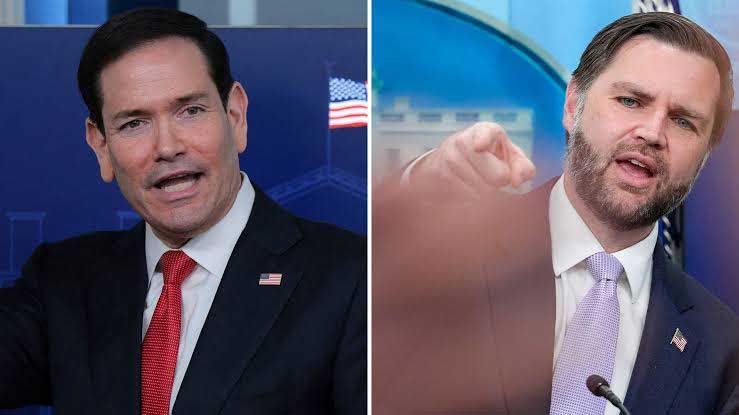
Vice President JD Vance and Secretary of State Marco Rubio appear to be pursuing different approaches to President Donald Trump’s national security agenda, as the two potential 2028 Republican presidential contenders navigate influence and policy within a divided GOP.
Despite publicly showing unity, the contrast between the two officials has become increasingly visible, particularly over how the administration should handle Iran and broader Middle East policy.
Rubio, the son of Cuban immigrants and a longtime senator before becoming Trump’s top diplomat, has built his foreign policy around traditional Republican themes, including strong support for US allies and a focus on Latin America. Vance, a former Marine and two-year senator before becoming Trump’s 2024 running mate, has promoted a more restrained foreign policy approach centred on avoiding foreign conflicts.
The biggest differences have emerged over Iran. Vance has at times criticised Israeli military actions in Lebanon, arguing that strikes against the Iran-backed Hezbollah group have complicated efforts to negotiate with Tehran. Rubio, meanwhile, has remained strongly supportive of Israel and has taken a leading role in Lebanon-related diplomacy.
“The talk about differences is not idle speculation,” said Dan Fried, a former US diplomat and current analyst at the Atlantic Council. “There is definitely something to it.”
The White House has rejected claims of a divide between the two officials, insisting that both are aligned with Trump’s agenda.
“Why is the legacy media obsessed with driving a wedge between Vice President Vance and Secretary Rubio that does not exist?” White House spokeswoman Anna Kelly said, adding that the administration is united behind Trump’s goal of preventing Iran from obtaining a nuclear weapon.
State Department spokesman Tommy Pigott also said Rubio and the administration remain “100 percent in lockstep” with Trump.
However, officials familiar with internal discussions said Rubio was sceptical about the possibility of reaching a successful agreement with Iran and declined to lead early ceasefire negotiations. Vance, seeing an opportunity to strengthen his foreign policy profile, reportedly pushed to take charge of the talks and eventually led US delegations in Pakistan and Switzerland.
The negotiations have produced a fragile understanding between Washington and Tehran, but the arrangement has faced renewed pressure following fresh exchanges of fire.
“It’s rather unusual for the VP to be given the lead role in a negotiation,” said former diplomat Ian Kelly, suggesting Rubio may have allowed Vance to take the responsibility because the outcome remains uncertain.
Both Vance and Rubio have denied any personal or policy conflict. Vance described Rubio as a close friend and said both were focused on serving the American people.
Rubio similarly rejected reports of tensions, saying the administration had “no drama” and that officials were working together to carry out Trump’s directives.
However, Trump himself has continued to fuel speculation about a future rivalry, repeatedly asking supporters who they would prefer to succeed him and suggesting that Vance and Rubio could potentially form a powerful political team.
Analysts say the differences reflect contrasting worldviews. Rubio has generally followed a traditional Republican foreign policy framework focused on defending the “free world,” while Vance has argued against military involvement in conflicts he sees as disconnected from US interests.
“Rubio speaks within the rubric of the Ronald Reagan construct of the free world,” Fried said. “Vance is not interested in that construct. He speaks in the language of not wanting to fight what he believes are abstractions.”
The rivalry could become more significant ahead of the 2028 Republican race. While Rubio’s allies say he would support Vance if the vice president runs, Rubio has also strengthened his influence inside the Trump administration by reshaping the National Security Council and placing several allies in key roles.
Those moves have increased Rubio’s profile as both secretary of state and a central figure in Trump’s foreign policy team, keeping him firmly positioned as a potential future contender.
Comments are closed.