
Yeh Prem Mol Liya review: Ayushmann Khurrana, Sooraj Barjatya film is stuck in the 90s

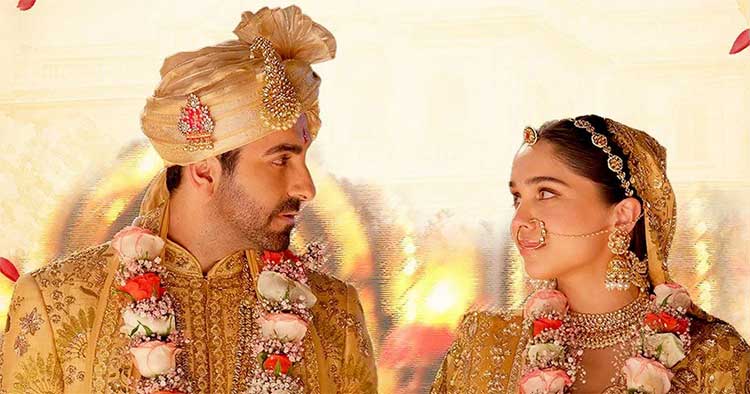
Sooraj Barjatya returns to his familiar world of family values, romance, weddings and traditional Indian households with Yeh Prem Mol Liya, starring Ayushmann Khurrana and Sharvari Wagh in the lead roles. However, despite attempting to give his signature family-drama formula a modern makeover, the filmmaker struggles to move beyond the storytelling style that made him popular in the 1990s.
The film borrows heavily from the filmmaker’s earlier blockbusters, particularly Hum Aapke Hain Koun (1994) and Hum Saath Saath Hain (1999). While nostalgia is an important part of its appeal, the familiar narrative, excessive melodrama and dated treatment make it difficult for the film to connect with contemporary audiences.
Ayushmann plays Prem Mishra, an aspiring singer who falls in love with Purva Solanki (Sharvari), a confident woman who lives with her extended family in Mumbai. Purva is unwilling to leave her family home after marriage. Instead of asking her to adjust to his household, Prem proposes that he and his family move into hers.
This unusual arrangement becomes the central conflict of the film, bringing two families with contrasting mindsets under one roof. Through their relationship, Barjatya attempts to question traditional expectations surrounding marriage, women’s independence and the unequal distribution of domestic responsibilities.
The premise is interesting, particularly because it reverses the conventional expectation that a woman must leave her parental home after marriage. However, the execution is far less convincing. The film takes a promising contemporary idea and wraps it in an old-fashioned treatment that frequently undermines its own message.
Yeh Prem Mol Liya review: Performances
Ayushmann Khurrana brings sincerity and warmth to Prem Mishra. His character is designed as an exceptionally supportive partner who stands by Purva even when it means going against his own family. Ayushmann handles the role comfortably, although the character’s almost unrealistic perfection leaves little room for emotional complexity.
Sharvari is equally impressive as Purva. She looks comfortable in Barjatya’s cinematic universe and delivers a convincing performance, particularly in the emotional sequences. Her chemistry with Ayushmann is pleasant, even though their romance develops rather quickly.
Among the supporting cast, Anupam Kher is dependable as Prem’s grandfather, while Swanand Kirkire brings the necessary conflict to the story as his conservative father. Supriya Pathak, Seema Pahwa and Geeta Agarwal Sharma add to the family drama, although several supporting characters deserved more substantial roles.
Yeh Prem Mol Liya review: Direction, screenplay and music
Sooraj Barjatya deserves credit for attempting to address questions about gender equality and traditional marital expectations. However, the screenplay struggles to balance its progressive ideas with the conservative worldview that defines much of his filmmaking.
The first half is relatively engaging as the two families and their eccentric members are introduced. The second half, however, becomes increasingly melodramatic, with several sequences feeling unnecessarily stretched. At nearly three hours, the film could have benefited considerably from tighter editing.
The biggest problem is that the filmmaker appears more interested in presenting an ideal family and an ideal husband than exploring the complications of modern relationships. Prem is portrayed as such a perfect partner that his character occasionally feels more like a fantasy than a real person.
Himesh Reshammiya’s music adds to the film’s nostalgic appeal, while the production design and colourful presentation bring back memories of classic Rajshri family entertainers. However, the songs do not consistently leave a lasting impression.
Yeh Prem Mol Liya review: Final verdict
Yeh Prem Mol Liya has its heart in the right place. Its central idea of questioning why women should always be expected to leave their homes after marriage is relevant and deserves attention. Unfortunately, the film’s execution is held back by predictable writing, excessive melodrama and a storytelling approach that feels several decades old.
Ayushmann Khurrana and Sharvari put in sincere performances, but even their efforts cannot completely rescue a film that struggles to reconcile traditional family values with modern ideas of equality.
For viewers who enjoy Sooraj Barjatya’s old-school family dramas, the film may offer a comforting dose of nostalgia. However, those expecting a genuinely fresh take on relationships and marriage may find themselves disappointed.
Verdict: A well-intentioned family drama that wants to be progressive but remains firmly stuck in the 90s.
Comments are closed.