
DMK backs delimitation Bills ahead of special Parliament session

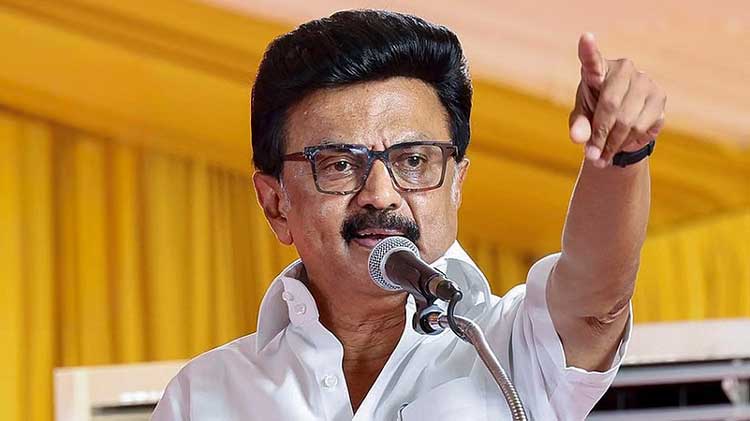
The Dravida Munnetra Kazhagam (DMK) on Saturday, November 28, announced its decision to support the Centre’s revised delimitation Bills ahead of the special session of Parliament scheduled to begin on November 30. The decision was taken at a meeting of the party’s Lok Sabha and Rajya Sabha MPs chaired by DMK president MK Stalin at the party headquarters, Anna Arivalayam, in Chennai.
The party’s decision marks a significant shift from its earlier opposition to the proposed delimitation exercise. The DMK had raised concerns that redrawing parliamentary constituencies based on population figures could reduce the political representation of Tamil Nadu and other southern states.
Senior DMK leader and Lok Sabha MP A Raja said the party decided to support the revised proposal after examining its provisions, particularly the provision for a uniform 50 per cent increase in the number of seats across all states.
According to Raja, the proposed arrangement would ensure that no state gains or loses disproportionately in terms of its share of parliamentary representation.
“The DMK has decided to support the Bill as it provides for a uniform 50 per cent increase in the number of seats across all states. We have always advocated fair delimitation, and our position on the issue remains unchanged,” Raja said.
Why did the DMK change its position?
The DMK had earlier opposed the Centre’s delimitation proposal, arguing that a population-based redistribution of parliamentary seats could disadvantage southern states that had successfully implemented population-control measures.
Tamil Nadu Chief Minister and DMK chief MK Stalin had repeatedly insisted that the state’s existing 7.18 per cent share of Lok Sabha seats must be protected. He had also demanded that the existing proportion of parliamentary representation among states, determined on the basis of the 1971 Census, remain unchanged for another 25 years.
The revised proposal reportedly addresses the party’s primary concerns by providing for a uniform 50 per cent increase in parliamentary seats across all states, thereby maintaining their relative share of representation.
DMK leaders said the arrangement would protect Tamil Nadu’s political representation while allowing the government to move forward with the implementation of women’s reservation.
Which Bills will be introduced during the special Parliament session?
The Union Cabinet, chaired by Prime Minister Narendra Modi, approved two delimitation-related Bills on November 27. These include the Constitution (One Hundred and Thirty-Second Amendment) Bill, 2026, and the Delimitation (Second) Bill, 2026.
The proposed legislation is linked to the implementation of 33 per cent reservation for women in the Lok Sabha and state Legislative Assemblies. It also seeks to facilitate an increase of 50 per cent in the strength of legislative bodies through the delimitation exercise.
The special sitting of Parliament is scheduled to take place from November 30 to December 3, with the government expected to seek parliamentary approval for the proposed constitutional changes. A constitutional amendment requires a special majority in both Houses of Parliament.
Opposition questions DMK’s decision
The DMK’s decision to support the revised delimitation proposal has also triggered political criticism, particularly from within the Opposition.
Congress MP Shashi Tharoor reportedly criticised the party’s position, arguing that even a proportional increase in seats could benefit larger states and questioning whether the DMK had overlooked the BJP’s broader political objectives.
However, DMK leaders have maintained that their decision is guided by Tamil Nadu’s interests and that the party has not abandoned its demand for fair delimitation.
A Raja also dismissed suggestions that the DMK’s decision was influenced by its changed political equations with the Congress and other Opposition parties.
Meanwhile, Stalin has directed all DMK MPs to remain present during the special Parliament session, underlining the importance of the proposed legislation.
The DMK’s support could prove politically significant for the Centre as it seeks the two-thirds majority required to pass the constitutional amendment Bills in Parliament.
Comments are closed.