
COP31 Stalemate: EU and 80 Nations Reject Climate Draft Over Missing Fossil Fuel Exit Plan

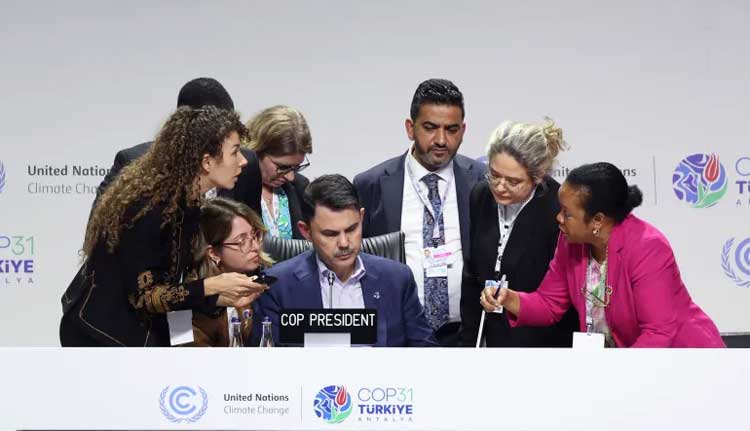
For the first time in more than 15 years, the annual United Nations climate conference has failed to reach a consensus on its main political agreement after the European Union and more than 80 other countries refused to endorse a draft that made no mention of phasing out fossil fuels at the COP31 meeting in Antalya, Turkey.
The disagreement has exposed deep divisions among participating nations over the future of coal, oil and natural gas, with countries pushing for a clear transition away from fossil fuels facing resistance from economies heavily dependent on their production and consumption.
The European Union, along with more than 80 countries, including several small island nations, had taken a similar position at COP30 in Brazil last year. They had called for a clear roadmap to phase out fossil fuels as part of global efforts to limit rising temperatures.
However, those demands were eventually dropped after oil-dependent economies such as Saudi Arabia secured support from influential countries, including India and China, to keep explicit references to fossil fuels out of the main agreement.
EU and Small Island Nations Demand Clear Roadmap
The latest disagreement at COP31 centres on the absence of a commitment to phase out fossil fuels in the proposed political declaration.
The European Union and several climate-vulnerable nations argue that global climate targets cannot be achieved without a clear reduction in the use of coal, oil and natural gas.
Small island states have been particularly vocal about the need for stronger climate action, as rising sea levels, extreme weather events and coastal erosion pose serious threats to their populations and territories.
For these countries, a fossil fuel phase-out is not simply an environmental objective but a matter of long-term survival.
The EU has also maintained that climate agreements must include concrete measures to reduce dependence on fossil fuels rather than relying solely on broad commitments to cut emissions.
Fossil Fuel Dispute Continues to Divide Countries
The disagreement reflects a long-standing divide between countries seeking an accelerated transition to clean energy and those concerned about the economic consequences of reducing fossil fuel production.
Oil-producing nations, including Saudi Arabia, have consistently resisted language that could be interpreted as requiring a rapid end to fossil fuel use.
Developing economies such as India and China have also emphasised the importance of national circumstances, energy security and the principle of common but differentiated responsibilities.
These countries argue that developed economies, which have contributed a larger share of historical greenhouse gas emissions, should take greater responsibility for financing the energy transition in developing nations.
The issue has repeatedly complicated negotiations at UN climate conferences, where decisions generally require consensus among participating countries.
Why Fossil Fuel Phase-Out Matters
Fossil fuels remain the largest source of global greenhouse gas emissions. Burning coal, oil and natural gas releases carbon dioxide and other pollutants that contribute to global warming.
At COP28 in Dubai in 2023, countries agreed for the first time to include a call for transitioning away from fossil fuels in the global climate agreement.
The commitment was widely viewed as a significant breakthrough, although disagreements over its implementation and the pace of the transition have continued.
At subsequent climate negotiations, several countries have pushed for a more detailed roadmap outlining how governments would reduce fossil fuel dependence while expanding renewable energy capacity.
What Happens Next?
The failure to secure consensus on the main political agreement at COP31 raises fresh questions about the ability of countries to reach common ground on increasingly urgent climate issues.
Negotiators now face the challenge of bridging differences between countries demanding stronger commitments and those unwilling to accept language that could affect their energy policies and economic interests.
The deadlock also highlights the difficulties of translating previous climate pledges into concrete action.
With extreme weather events, rising temperatures and climate-related disasters increasing pressure on governments, the outcome of the Antalya negotiations could have significant implications for international climate cooperation.
The central question remains whether countries can agree on a meaningful pathway away from fossil fuels without compromising the energy security and development priorities of vulnerable and developing economies.
Comments are closed.