

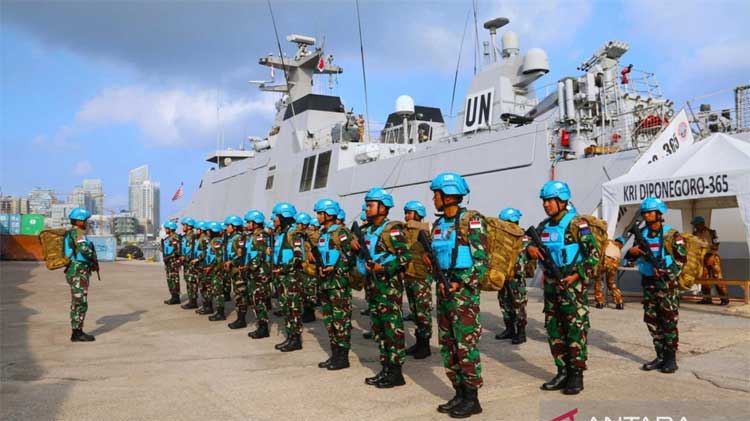
Indonesia will deploy more than 700 new peacekeepers to United Nations Interim Force in Lebanon later this month, despite growing security concerns after four Indonesian soldiers were killed in recent Israeli attacks in southern Lebanon.
The new contingent of at least 742 troops will replace the current Indonesian Garuda force serving with the mission and is scheduled to depart on May 22.
Indonesia has contributed troops to UNIFIL since 2006, after the mission’s mandate was expanded following the 2006 Lebanon war to help the Lebanese Army maintain control in the country’s south along the Israeli border.
Foreign Minister Sugiono said Jakarta remained committed to supporting global peace efforts through its participation in UN peacekeeping operations.
“As one of the largest contributors to UN Peacekeeping Missions, Indonesia continues to uphold its constitutional mandate and independent and active foreign policy in supporting world peace,” Sugiono said after meeting the outgoing troops earlier this week.
As of May 1, 2026, UNIFIL had around 7,400 peacekeepers from 47 countries, with Indonesia contributing the largest contingent of 748 personnel.
The deployment comes amid heightened tensions in southern Lebanon, where six UN peacekeepers have been killed during Israel’s escalating military offensive in recent months, including four Indonesians. Jakarta has demanded a thorough investigation into the incidents.
Honi Hovana, spokesperson for Indonesia’s Coordinating Ministry for Political and Security Affairs, said the government could consider an early troop withdrawal if UNIFIL can no longer guarantee the safety of its personnel.
Analysts say Indonesia faces a difficult balancing act between its commitment to international peacekeeping and growing risks on the ground.
Aisha Kusumasomantri, director of Jakarta-based think tank Indo-Pacific Strategic Intelligence, said Indonesia recognises that the Lebanese Armed Forces still need international support, but warned that UN peacekeepers now have limited ability to defend themselves in what has effectively become an active war zone.
Israeli forces have repeatedly come under criticism for attacks on UN peacekeepers since the 2024 invasion of southern Lebanon. In October that year, two Indonesian peacekeepers were wounded after Israeli tanks reportedly fired near UNIFIL headquarters in Naqoura.
Kusumasomantri said Israel partly blames UNIFIL for allowing Hezbollah to strengthen over the years and argued that peacekeepers may also serve as witnesses to potential violations of international humanitarian law in southern Lebanon.
UNIFIL, first deployed in 1978, is currently expected to conclude its mandate at the end of 2026, though analysts say any extension would depend on securing a lasting ceasefire in the region.
Despite a US-mediated ceasefire reached last month and due to remain in effect until May 17, Israeli strikes and clashes with armed groups in southern Lebanon have continued almost daily.
Comments are closed.