
Macron and Far-Right Leader Le Pen Clash Over EU’s Next Long-Term Budget

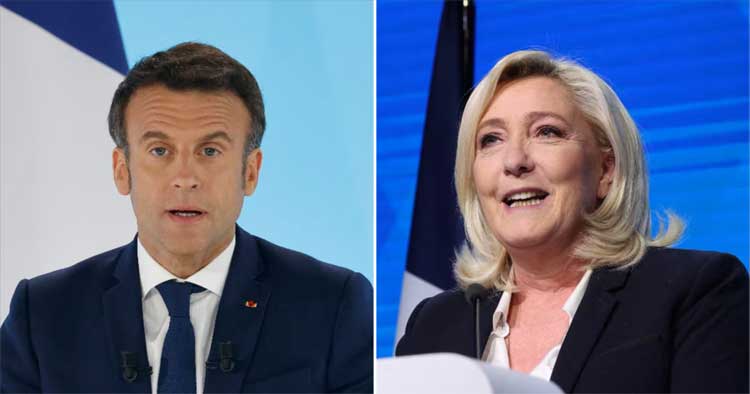
French President Emmanuel Macron on Thursday hit back at far-right leader Marine Le Pen, accusing her of “arrogance” after she criticised efforts to finalise the European Union’s next long-term budget before France’s 2027 elections.
The remarks came after a Brussels summit ended without a breakthrough on the bloc’s 2028-2034 budget, following more than 12 hours of negotiations. European leaders acknowledged that reaching an agreement by the end of the year would be difficult.
“We are not there yet,” German Chancellor Friedrich Merz told reporters after the summit, although he said he had “not given up hope” of securing a deal when leaders meet again on December 17.
A failure to reach an agreement could push the contentious negotiations into an election year across Europe, particularly in France. Macron has raised the stakes by warning that he could walk away from the negotiations if the process extends into that period.
Le Pen, currently the leading contender to succeed Macron next spring, criticised the push to finalise the budget before the French elections. In a social media post, she described it as “underhanded political manoeuvring to thwart the democratic will of the French people”.
Responding on the sidelines of the summit, Macron said: “It is an odd kind of arrogance to behave as if she is already in charge of France’s destiny because, as things stand, she has not been elected.”
The exchange was the latest in a series of clashes between the two leaders over European spending and France’s financial commitments.
Last month, Macron urged Le Pen to “stay humble” after she outlined plans to reduce French aid to Ukraine and cut the country’s contribution to the European Union.
Deep divisions over EU budget
European leaders have spent much of 2026 debating the size of the bloc’s next seven-year budget after the European Commission proposed a spending package worth two trillion euros, drawing opposition from several member states.
The latest proposal by European Council President Antonio Costa sought to narrow the differences by reducing the proposed budget by 204 billion euros ($224 billion) and introducing a tax on digital companies.
Costa urged leaders to demonstrate a willingness to compromise, but the latest round of discussions failed to produce an agreement.
A group of so-called “frugal” countries, including Germany and the Netherlands, has been pushing for a smaller budget. The group, which calls itself the “Sensible Seven”, wants tighter control over EU spending.
Speaking after the summit, Merz said Germany would continue pressing for budget cuts. Several like-minded countries also skipped the final summit discussions to express their dissatisfaction with the negotiations.
On the other side, 17 southern, central and eastern European countries belonging to the “Friends of Cohesion” group are seeking greater funding for agriculture and regional development. Their demands were backed by hundreds of farmers who staged demonstrations outside the summit venue.
Despite the lack of progress, Costa described the meeting as a necessary step in the negotiation process.
“Everyone had to show they did not agree — and stage a bit of political theater,” an EU diplomat said, playing down the significance of the disagreements.
France has strongly opposed proposals to reduce the budget, arguing that European farmers need greater financial support and that the bloc must increase investment to address its growing economic and geopolitical challenges.
Macron described substantial budget cuts as a “strategic error”, warning that they could undermine Europe’s ability to compete with economic powers such as China and the United States.
French elections cast shadow over negotiations
The 2027 French presidential election has emerged as a major consideration in the budget discussions, with Le Pen’s potential victory raising concerns among several European leaders.
“The prospect of a potential Le Pen victory — and its consequences — is always in the back of everyone’s mind,” an EU diplomat said.
However, some leaders rejected the suggestion that the French election should influence the timing of an agreement. Austrian Chancellor Christian Stocker said he was “certainly not afraid of an election in France”.
Italian Prime Minister Giorgia Meloni also argued that there was “no hard deadline” for reaching a budget deal.
Ukraine funding adds to EU tensions
The already complicated negotiations have faced another obstacle after Merz linked progress on the EU budget to an agreement on additional funding for Ukraine.
EU member states are being asked to approve a further 45-billion-euro ($49 billion) loan to help finance Ukraine through 2027. However, the Czech Republic, Hungary and Slovakia are seeking exemptions from the arrangement.
The three countries, which also opted out of a similar large-scale loan last year, are generally net recipients of EU funding.
Merz reiterated his opposition to allowing individual member states to avoid contributing to Ukraine’s financial support.
“I stand by my position that aid for Ukraine must be borne by the entire European Union,” the German chancellor said.
Comments are closed.