
NATO aims to win over Trump with defence push after Iran rift

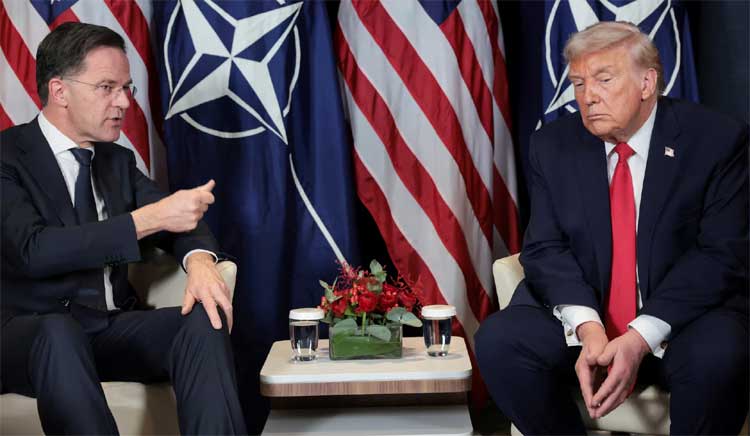
NATO leaders will gather in Ankara on Tuesday aiming to showcase a sharp increase in defence spending and stronger military commitments as they seek to reassure US President Donald Trump of Europe’s resolve on security and burden-sharing.
The two-day summit at the Turkish presidential palace comes a year after NATO members pledged to raise defence and security-related spending to 5% of GDP under pressure from Trump. NATO Secretary General Mark Rutte said allies have made “transformational progress” in boosting military budgets and assuming greater responsibility for Europe’s defence against Russia.
Trump arrived in Ankara late Monday accompanied by Secretary of State Marco Rubio and Defence Secretary Pete Hegseth.
Allies unveil defence deals amid Trump pressure
European leaders are expected to announce arms deals worth tens of billions of dollars at an industry forum ahead of the main summit, highlighting efforts to strengthen NATO’s military capabilities.
Canada also announced that it had selected Germany’s Thyssenkrupp Marine Systems to build a new submarine fleet, describing the multibillion-dollar programme as part of a broader push to deepen defence cooperation with European NATO allies.
Despite the spending commitments, Trump has criticised European allies in recent days, arguing they have not moved quickly enough on defence and expressing frustration over restrictions placed on US military operations linked to Iran.
Ukraine and Iran high on summit agenda
Leaders are also expected to discuss continued support for Ukraine, with President Volodymyr Zelensky attending the summit and scheduled to meet Trump. European allies are preparing to commit at least €70 billion ($80 billion) in military assistance to Kyiv annually in 2026 and 2027.
Zelensky is expected to press NATO for stronger air defence support following recent Russian missile and drone attacks, while also urging Trump to increase pressure on Moscow to return to meaningful peace negotiations after the US president’s recent conversation with Russian President Vladimir Putin.
Meanwhile, European allies are also coordinating their response to tensions in the Middle East, including possible naval deployments to the Strait of Hormuz, even as they await greater clarity on the durability of the recent US-Iran understanding.
Comments are closed.