
Trump defends Iran deal, says it protects Israel from nuclear danger

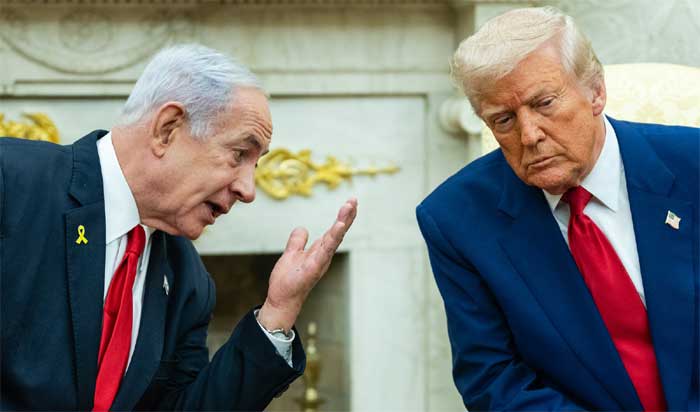
US President Donald Trump defended the newly signed US-Iran peace agreement on Wednesday, arguing that the deal addresses what he described as Israel’s greatest security threat: the possibility of Iran acquiring a nuclear weapon.
Speaking in Évian-les-Bains, France, after the signing of the accord between Washington and Tehran, Trump said he had personally assured Israeli Prime Minister Benjamin Netanyahu that the agreement delivers the outcome Israel had long sought.
“Your biggest risk was that they’d drop a nuclear weapon into the middle of Israel,” Trump said, recounting a recent conversation with Netanyahu. “You got the most important thing that you were asking for.”
Trump maintained that Israel was “very happy” with the agreement, which includes provisions for Iran to dilute its stockpile of highly enriched uranium and opens a 60-day window for negotiations on a broader settlement over Tehran’s nuclear programme.
The US president also underscored Washington’s central role in Israel’s security, declaring that no previous American leader had provided the level of support he had extended to the Jewish state. Earlier during the G7 summit, however, Trump had criticised Israel’s military actions in Lebanon and suggested Netanyahu needed to act “more responsibly.”
The remarks come amid growing uncertainty over the future of Israel’s campaign against Hezbollah in Lebanon. While the US-Iran agreement seeks to end hostilities across the region and includes language supporting Lebanon’s territorial integrity, Israel has insisted it retains the right to continue military operations against Hezbollah and maintain positions in parts of Lebanese territory.
Iran, meanwhile, has repeatedly argued that any lasting peace arrangement must include an end to fighting on all fronts, including in Lebanon.
Netanyahu has firmly rejected suggestions that the US-Iran accord requires an Israeli withdrawal. “As long as I am the prime minister of Israel, it will not happen,” he said earlier this week.
The agreement has also sparked political debate within Israel. Critics of Netanyahu argue that the deal reflects a diplomatic setback for the Israeli leader, who has long opposed agreements that leave Iran with any significant nuclear capabilities.
Former Israeli prime minister Ehud Barak accused Netanyahu of mishandling relations with Washington, saying Israel was “paying the price” for what he described as the prime minister’s political miscalculations.
As negotiations between Washington and Tehran move into the next phase, the future of Israel’s operations in Lebanon is likely to remain one of the most contentious issues surrounding the broader regional settlement.
Comments are closed.