
Trump’s envoy and Iran’s foreign minister head to Switzerland for negotiations

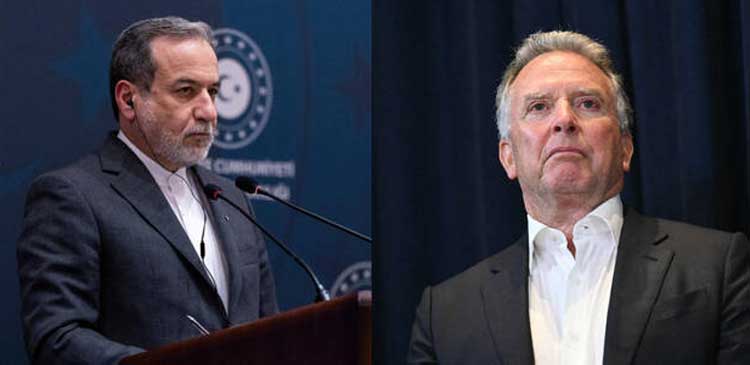
US envoy Steve Witkoff and Iranian Foreign Minister Abbas Araqchi are set to travel to Switzerland for talks, Axios reported on Friday, as a ceasefire between Israel and Hezbollah in Lebanon revived hopes of turning an interim Iran war agreement into a broader regional deal.
The Israel-Hezbollah ceasefire came after weeks of escalating clashes that had threatened to derail US-Iran negotiations focused on reopening the Strait of Hormuz and stabilizing global energy supplies.
The two sides had earlier signed a 14-point memorandum aimed at stopping hostilities and creating a 60-day period to address disputes over Iran’s nuclear programme and other issues needed for a long-term agreement.
US Vice President JD Vance had canceled his planned trip to Switzerland on Thursday amid rising tensions in Lebanon. Following the ceasefire, Witkoff is expected to join Jared Kushner, US President Donald Trump’s son-in-law, who is already in Switzerland, while Araqchi is expected to arrive on Saturday.
The move could indicate that Washington and Tehran are preparing to begin technical negotiations aimed at achieving a permanent ceasefire and a wider settlement.
The White House has not commented on Witkoff’s travel plans. A senior US official said the Lebanon ceasefire came into effect after negotiations involving the United States and Qatar, with Iran also playing a role.
Hezbollah and an Israeli official confirmed the ceasefire, with Israel saying it would maintain troops in southern Lebanon while monitoring the situation.
Lebanese officials said Israeli strikes in the hours before the ceasefire killed dozens of people, while Israel reported the deaths of four soldiers in an incident in Lebanon.
Key issues remain unresolved
Preparations for technical discussions at Switzerland’s Buergenstock resort were already underway after the memorandum was signed, but the White House announced Vance would no longer attend.
Switzerland said the talks had been postponed but that it remained ready to facilitate discussions.
The interim agreement calls for the US, Iran and their allies to end military operations across all fronts, including Lebanon. Israel, which was not included in the negotiations, has said it is not bound by the deal.
Iranian officials said Washington would be responsible for fulfilling commitments under the agreement, including efforts to stop the fighting in Lebanon.
Lebanon talks and regional tensions
Lebanon became involved in the wider conflict after Hezbollah launched attacks on Israel, leading to Israeli military operations in southern Lebanon.
Lebanese President Joseph Aoun criticized Israeli strikes but said they would not stop efforts toward a comprehensive ceasefire.
The US State Department said Secretary of State Marco Rubio spoke with Aoun about disarming Hezbollah and supporting Lebanon’s sovereignty. The two sides also discussed a new round of Israel-Lebanon talks in Washington scheduled for June 23-25.
Trump defends Iran agreement
The Iran conflict, which began with US and Israeli strikes on Iran, has caused thousands of deaths and disrupted global energy markets.
Oil prices eased after the Lebanon ceasefire, while shipments through the Strait of Hormuz increased following the interim agreement. The strategic waterway carries a major share of global oil and gas supplies.
The agreement reportedly includes possible sanctions relief for Iran, the release of frozen assets, oil export waivers and financial support for reconstruction.
President Donald Trump defended the deal amid criticism from some lawmakers who argued the agreement offered too many concessions.
“The war has diminished Iran,” Trump said in a social media post, adding that Iran had entered negotiations from a position of weakness and that the 60-day period would determine the next steps.
Comments are closed.